Published
- 5 min read
Nadi Town Culture & Food Walking Tour - Markets, Tastings & Sri Siva Temple
Most Nadi visitors experience the town through a taxi window. The main street blurs past, the temple appears and disappears, and that’s about it. This small-group walking tour reverses that: you walk into the produce market, through the handicraft scene, and finish at the Sri Siva Subramaniya Temple with a guide who can explain what you’re looking at.
It’s not a restaurant-crawl food tour. It’s closer to an orientation tour with tastings—practical information about what Fiji actually eats, how the markets work, and what the temple means to the community that built it. Travellers consistently describe it as the best first-morning activity they did in Nadi, partly for the content and partly for the practical tips they carry through the rest of the trip.
At a glance
- Duration: ~3 hours
- Group size: small (often listed up to ~10)
- Start point: Prouds Downtown Nadi Shopping Complex, Main Street, Nadi Town (guide holds a sign)
- End point: Sri Siva Subramaniya Temple (option to walk back toward town with your guide)
- Included: fruit and food tastings, bottled water, temple entry fee
What you’ll do
Nadi Produce Market
The tour begins at the heart of Nadi’s daily food supply. The produce market—open every morning, busiest early—is where local households, restaurants, and village buyers source root crops, fruit, and vegetables: cassava, dalo (taro), kumala (sweet potato), rourou (taro leaves), bele, breadfruit, pawpaw, and pineapple in varieties not found in supermarkets.
The guide explains what’s in season, how each ingredient appears in Fijian and Indo-Fijian cooking, and why certain items carry cultural significance. Tastings are typically arranged here—fresh tropical fruit, and often a coconut water from a vendor who hacks one open while you watch.
If you want to buy fruit to take away, bring small cash. Vendors may not easily change large bills.
Handicraft Market
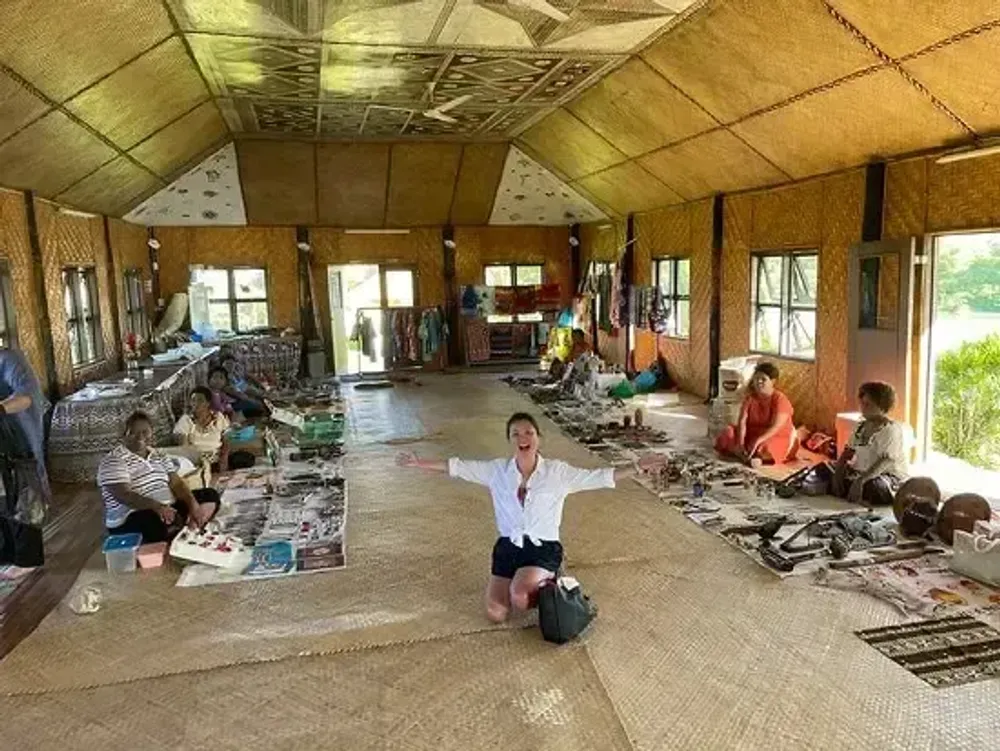
Less about shopping than about understanding. Your guide can explain the difference between locally handmade pieces and imported items, what different carving patterns mean, how traditional woven ibe (mats) are made, and what represents fair value. This is useful context whether you buy anything or not. If you do want to purchase, the guide can help you navigate price expectations without causing offence.
Sri Siva Subramaniya Temple
The tour’s finale—and for most guests, the most memorable stop. The Sri Siva Subramaniya Swami Temple on Queens Road is the largest Hindu temple in the South Pacific. Built by Dravidian craftsmen from South India in traditional gopuram style, its facade is a towering multi-panel painting of Hindu mythology: Murugan, Shiva, Parvati, and attendant deities in vivid primary colours. It’s architecturally impressive and culturally significant in a way that a drive-past doesn’t reveal.
The temple was built by Fiji’s Indo-Fijian community—descendants of indentured labourers brought from India to work British-owned sugarcane plantations from 1879 onward. Today roughly 37% of Fiji’s population is Indo-Fijian, and the story of how this community came to be here—and what they built—is one of the most important in Fijian history. A good guide makes it accessible.
Before entering: shoes off at the entrance. Cover shoulders and knees—a sulu is available to borrow at the gate. Don’t photograph the inner shrine. Follow the guide’s lead throughout. Entry fee is included in your tour fare.
After the temple, many guides offer to walk you back toward town, pointing out useful local knowledge along the way.
Meeting point and end point
Meet: at the front of the Prouds Shopping Complex Building, Main Street, Nadi Town (guide holds a sign). Arrive a few minutes early if you’re unsure of the location—ask any local or nearby shop.
Tour ends: at Sri Siva Subramaniya Temple, Queens Road, south end of Nadi Town. Arrange your own transport back to your hotel from the temple—confirm this before the tour starts.
What’s included
- Fruit and food tastings
- Temple entry fee
- Bottled water
What to bring
Comfortable walking shoes (Nadi’s footpaths are uneven in places). Sunscreen, hat, and sunglasses. A small amount of cash if you want to buy produce or handicrafts. A light layer if you’re sensitive to midday sun during the open market sections.
What travellers say
Reviews are consistent on two points: the guide’s knowledge is excellent, and the practical tips—on transport, food, prices, and what to see—carry real value for the rest of the trip. Multiple guests describe it as the best first activity of their Fiji visit precisely because it gave them confidence to navigate the country more independently.
One reviewer mentions completing the tour with a baby in a pram, which is helpful to know—the route is mostly flat, though market areas can be crowded and footpaths uneven.
FAQs
Is this a proper food tour with sit-down meals?
No—it’s tastings and market engagement, not restaurant visits. If you want a culinary deep-dive with multiple courses, this won’t deliver that. What it delivers is practical knowledge about what Fijians eat and buy, which is useful context for the rest of your stay.
What kind of practical tips does the guide give?
Based on reviewer feedback: local restaurant recommendations, which markets are worth visiting independently, how to negotiate with handicraft sellers, fair taxi fare expectations, and how the local bus system works. These come up repeatedly as the reason guests rate the tour so highly.
Can I do this with young children?
Yes—the route is manageable for most ages, and the market and temple engage curious kids. Prams are feasible but expect some uneven ground. Duration is short enough that restless toddlers can usually manage.
Meets at Prouds Shopping Complex, Main Street, Nadi Town. Ends at Sri Siva Subramaniya Temple, Queens Road.
Ready to book this tour?
Purchase On ViatorBy: Sarika Nand