Published
- 24 min read
Shark Diving in Fiji: Everything You Need to Know
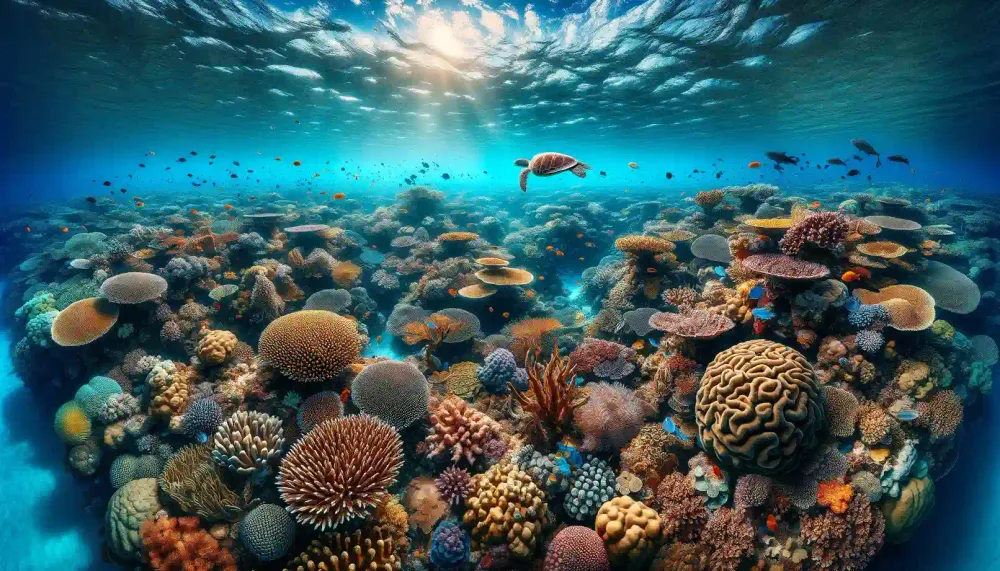
There is a moment on the Beqa Lagoon shark dive — usually about ten minutes in, once the initial adrenaline has settled and you’ve found your position on the sandy bottom — when you stop reacting and start watching. A bull shark the size of a small car slides past at arm’s length, unhurried and massively present, and the appropriate response isn’t fear. It’s something closer to awe. This is what makes Fiji’s flagship shark dive genuinely exceptional: it isn’t the thrill alone — it’s the sudden, visceral understanding that you are a guest in an ecosystem that functions entirely without your permission.
The Beqa Lagoon shark dive, conducted at Shark Reef Marine Reserve off the town of Pacific Harbour on Viti Levu’s southern coast, is consistently ranked among the top ten shark dives on the planet. It differs from most cage-based or purely opportunistic shark encounters in one crucial respect: you are in the water with the animals, unenclosed, kneeling on the sand while up to eight species of shark move freely around you. The dive is structured, it has been refined over two decades of operation, and it sits within one of the world’s most serious marine conservation frameworks — but none of that removes the wildness of the encounter. This is not a performance. The sharks are real, the depth is real, and the experience is real.
Fiji declared itself a shark sanctuary in 2014, making it illegal to fish for sharks or trade in shark fins in Fijian waters. This was not only a significant statement — it was a practical one. The populations at Beqa are healthy precisely because the animals are protected and have been for years. The Shark Reef Marine Reserve predates the national sanctuary by a decade, having operated managed shark dives since 2004. The result is an encounter that combines adrenaline, extraordinary beauty, and a functioning conservation model that is studied internationally. If you are a certified diver visiting Fiji and you skip this dive, you will regret it.
Beqa Lagoon: The Main Shark Dive Site
Shark Reef Marine Reserve sits in Beqa Lagoon, roughly an hour by boat from Pacific Harbour on Viti Levu’s Coral Coast. Pacific Harbour itself is a small, laid-back town that markets itself — with good reason — as the adventure capital of Fiji, but the shark dive is its undisputed headline act.
The reserve was established in 2004, making it one of the world’s first purpose-managed shark feeding dive sites. Long before Fiji’s national shark sanctuary legislation came into effect, the operators at Beqa were working with local fishing communities to create a protected area where shark feeding dives could be conducted responsibly and where the proceeds would fund reef management. That model has held, and the reef has benefited accordingly.
The dive itself is conducted at two distinct platforms within the reserve. The upper platform sits at approximately 15 metres and is accessible to most certified divers with basic open water skills. It offers excellent visibility of the action at the feeding station below and is a perfectly good vantage point on its own. The lower feeding area sits at 28 to 30 metres — a depth that puts it firmly in experienced-diver territory — and is where the feeding actually takes place. This is where you will have the closest and most intense encounters with the bull sharks and larger species.
On a typical dive, the sequence follows a pattern that operators have developed and refined over many years. The first to arrive are the smaller reef species — whitetip reef sharks, silvertips, and nurse sharks — which begin circling as the dive boat approaches and divers descend. By the time you’ve settled into position on the sandy bottom, there are already a dozen or more sharks in the water. The feeding begins with baitfish dropped from a purpose-built feeding box, and the energy shifts noticeably. Bull sharks — thick, muscular, utterly authoritative in the water — move in from the blue. If you are diving between January and May, there is a reasonable chance of encountering tiger sharks, which are considerably larger and come with their own quality of presence.
The feeding protocol is carefully managed. Dive operators control the feed from behind a rock wall, and divers kneel in a designated position — not directly in the feeding zone. This is not about creating a false sense of safety; it is about managing the animals’ approach vectors so encounters are predictable rather than chaotic. Divemasters are positioned throughout the site and are experienced in reading the sharks’ behaviour. The dive itself runs for approximately 45 to 60 minutes underwater.
The boat ride out from Pacific Harbour takes around an hour in each direction. A typical day involves a morning briefing at the operator’s base, two dives at the reef (with a surface interval between them), and return to the dock by early afternoon. Some operators include a visit to a shallower reef on the second dive as a decompression contrast — natural reef, no feeding, just the ordinary extraordinary life of Fijian coral.
Species You’ll See
Part of what makes Shark Reef Marine Reserve remarkable — and genuinely unusual by global standards — is the species diversity. Up to eight species of shark have been recorded at a single dive site, which is exceptional anywhere on earth. Here is what you are likely to encounter.
Bull sharks (Carcharhinus leucas) are the main event, present year-round and consistently the most numerous large species at the feeding station. They are stocky, powerfully built animals, typically 2 to 3 metres in length, with a distinctively blunt snout and the kind of mass that you feel before you see. Bull sharks have a reputation as one of the more aggressive species in certain contexts — they are found in shallow coastal and even freshwater environments, and incidents globally are not uncommon — but in the structured dive environment at Beqa, they behave with the unhurried confidence of animals that know they are in control. Watching them is remarkable. They are not performing for the divers; they are simply present, and that presence is the point.
Tiger sharks (Galeocerdo cuvier) are the seasonal highlight. They arrive most reliably between January and May, drawn by the same feeding activity, and they are considerably larger than the bull sharks — adults regularly reach 3.5 to 4 metres and beyond, and their distinctive pattern of dark vertical stripes fading against a pale underside is unmistakable. If a bull shark commands respect, a tiger shark commands silence. They tend to move through the site at a more deliberate pace than the bulls, and encounters with them are among the most frequently cited memories of divers who have done this dive.
Whitetip reef sharks (Triaenodon obesus) are among the first to appear at the start of a dive and are present throughout. Slender and faster-moving than the bulls, they occupy the middle of the water column and are immediately recognisable by the white tips on their dorsal and caudal fins. They are not the focus of the dive but their numbers — sometimes twenty or more at once — are their own kind of spectacle.
Silvertip sharks (Carcharhinus albimarginatus) are similar in silhouette to the whitetips but larger, sometimes approaching 2 metres, with white-edged fins throughout. They are open-water animals by nature and their appearance at the reef adds a sense of scale to the ensemble.
Nurse sharks and tawny nurse sharks are the most docile animals on the site — bottom-dwelling, slow-moving, and remarkable primarily for their size. Nurse sharks can reach 2.5 to 3 metres and have a habit of positioning themselves directly in front of kneeling divers with complete indifference to the human presence. Some divers find this charming; others find it mildly alarming until they understand the animal’s temperament.
Lemon sharks (Negaprion acutidens) are present irregularly but are a genuine additional sighting when they appear — stocky, pale-coloured, and distinctly different in profile from the more commonly seen reef species.
The combination of these species in a single dive, in open water without caging or barrier, is genuinely rare. There are other places in the world where you can dive with bull sharks, other places where tiger sharks are reliably sighted, but very few where the two apex species share a site with a supporting cast of five or six additional species in conditions as accessible and well-managed as these. It is, for serious divers, a meaningful tick.
Dive Operators
There are two established operators based at Pacific Harbour who run regular shark diving trips to the Shark Reef Marine Reserve, along with a number of resort-based dive shops that organise transfers to the site.
Beqa Adventure Divers (BAD) is the longest-established operator and has been closely involved in the management of the Shark Reef Marine Reserve since its early years. The company’s connection to the reserve goes beyond running tours — they participate directly in the conservation model, contribute to management fees, and have helped develop the feeding protocols that are now used across the site. Their guides are among the most experienced on the reef, and their briefings are thorough and specific about both safety and the conservation context of what you are doing. BAD is regarded by most experienced divers who have done the dive as the benchmark operator for environmental seriousness. They are based directly at Pacific Harbour.
Aqua-Trek Pacific Harbour is the other principal operator and is a well-established, reputable alternative. Their safety record is strong, their guides are experienced at the site, and they offer a similar two-dive structure. Some travellers prefer them on practical grounds (availability, group size, package pricing), and the experience at the reef is equivalent in quality. Both operators are worth contacting directly to compare availability and pricing before committing.
Various resort-based dive shops — at properties along the Coral Coast and in Pacific Harbour — also run transfers to Beqa for certified divers. The quality of these experiences varies depending on how regularly the resort shop dives the reef and how familiar their guides are with the site. If you are booking through a resort, it is reasonable to ask how frequently their staff dive Shark Reef and whether they have shark feeding-specific training.
When choosing any operator, look for PADI certification (or equivalent from NAUI, SSI, or another internationally recognised body), ask about the specific protocols used at the feeding station, and pay attention to whether the pre-dive briefing includes meaningful conservation context. Operators who treat the dive purely as entertainment without acknowledging the broader significance of what they are operating within are missing the point, and that attitude tends to show in other aspects of the operation as well.
Is It Safe?
This is the question that sits, usually unasked, at the edge of every conversation about this dive. Let’s address it properly.
These are wild animals. They are not trained, they are not tame, and they are not performing. Bull sharks and tiger sharks are apex predators, and they are in the water with you because the dive operators are providing food — not because they find human company particularly interesting. The dive has a carefully developed protocol and an exceptionally strong safety record across two decades of operation, but it would be dishonest to present it as risk-free in the same way that no open-water dive is risk-free.
What the data shows, however, is that the structured nature of the dive makes it far safer than an unmanaged encounter with the same species. The animals are habituated to the presence of divers at this site; they are not startled or provoked; the feeding sequence is predictable and the divemasters know how to read the sharks’ behaviour. Incidents in over twenty years of operation at Beqa have been extremely rare. The protocols — staying behind the rock wall, maintaining your kneeling position, not reaching towards the animals — exist for good reasons and are enforced.
The more realistic risks on this dive are the same as those on any deeper open-water dive: current management (the lagoon can be moderately affected by tidal movement), depth management at the lower platform where nitrogen narcosis can affect judgement at 28 to 30 metres, and basic buoyancy control. These are not unique to the shark dive — they are the standard requirements of any dive at that depth. If your buoyancy is solid and you have dived at this depth before without difficulty, the additional presence of sharks does not substantially change the risk profile of the dive.
The honest framing is this: the sharks are animals behaving according to their instincts in a well-managed environment. The divers are managed, the animals are not threatened or cornered, and the encounter is structured so that neither party is placed in a position of genuine danger. That does not mean you should go into it casually. It means that if you are a confident, experienced diver who follows briefing instructions and maintains composure, you are very unlikely to come to any harm — and very likely to have one of the defining experiences of your diving life.
Certification Requirements
For the upper platform at approximately 15 metres, the minimum requirement is PADI Open Water certification (or equivalent from any internationally recognised certifying body). This is the standard entry-level certification and most leisure divers will hold it. At this depth, you will have a full view of the feeding action at the lower platform and encounters with the full range of species including bull sharks.
For the lower feeding area at 28 to 30 metres, PADI Advanced Open Water (or equivalent) is strongly recommended and required by most operators. The Advanced certification includes a deep dive component specifically designed to introduce divers to the physiological effects of depth, including nitrogen narcosis, and to build the skills needed to manage them. Diving at 30 metres without this experience is not safe regardless of the other attractions of the site.
Some operators also specify a minimum number of logged dives — typically 20 to 30 — before they will take a diver to the lower platform. This is not bureaucracy for its own sake. The ability to stay calm, control your buoyancy, manage your air consumption, and follow divemaster directions at depth is something that only comes with practice, and in an environment with large apex predators, the margin for error is narrower than on a reef dive. Be honest about your experience level when booking and when briefed. Operators would rather adjust your placement than deal with an incident.
Divers who are not yet Advanced certified can and absolutely should do the dive from the upper platform — it is a fully satisfying experience and the sharks come close enough. The lower platform is a genuine enhancement for those who qualify, but the upper dive is not a lesser version of the experience.
Snorkel Options
Not every visitor to Pacific Harbour is a certified diver, and the shark dive is not purely a divers-only experience. Several operators offer snorkelling options at shallower reef areas associated with the reserve, where smaller shark species — whitetip reef sharks in particular — can be encountered in relatively shallow water without scuba equipment.
This is not the same experience as the deep bull shark dive. The feeding sequence and the large pelagic species occur at depth, and no amount of surface snorkelling replicates the encounter with a 2.5-metre bull shark moving towards you on a sand bottom. However, snorkelling in Fijian waters with reef sharks actively present is itself an extraordinary experience by any ordinary standard, and for travellers who do not dive, it provides a genuine sense of the marine life of the lagoon rather than a boat-based spectator role.
If you are a non-diver and you intend to travel to Fiji, Beqa is a very good motivation to complete your PADI Open Water certification before you travel. It takes four to five days in most cases and can be completed in your home country or at dive shops in Fiji itself — though completing it in Fiji will absorb several days of your holiday. The investment is significant beyond this single dive; Fiji’s coral reefs are outstanding across the islands, and being certified opens up a range of experiences that snorkelling cannot access.
Logistics
Getting to Pacific Harbour
Pacific Harbour sits on Viti Levu’s Coral Coast, approximately 1.5 hours by road from Nadi International Airport and around 45 minutes from Suva. The Queens Highway connects all three points, and the drive from Nadi passes through the Coral Coast — a stretch of reef-fringed coastline that is attractive in its own right. Most divers coming from Nadi or Denarau arrange a private transfer or hire a local driver for the day. The public express bus from Nadi to Pacific Harbour is reliable and inexpensive (approximately F$8–12 one way) but requires some coordination with dive departure times.
From Suva, Pacific Harbour is close enough to make a same-day return trip comfortably. A taxi from Suva runs approximately F$60–80 one way; the express bus is F$5–8.
The Dive Day Structure
A standard shark dive day runs roughly as follows. You check in at the operator’s base at Pacific Harbour by around 7 to 7:30am, complete the waiver and rental gear fitting, and attend a thorough briefing covering the site layout, the feeding sequence, the protocol for divers at the feeding station, and emergency procedures. The briefing is detailed and important — pay attention. The boat departs for the roughly one-hour transit to Shark Reef, with the first dive commencing around 9 to 9:30am. Between the two dives there is a surface interval on the boat (or in some cases at a beach on Beqa Island), and the second dive follows. Return to Pacific Harbour is typically by early to mid-afternoon.
What to Bring
Your dive certification card and logbook are non-negotiable. All operators will need to see both before you enter the water. Bring a wetsuit if you own one (3mm is adequate for Fijian waters, though most rental gear is available at the operators); otherwise rental suits are available at standard rates. Sun protection for the boat ride, motion sickness tablets if you are prone to nausea on open water, a dry bag for your camera and valuables, and cash for any tips or incidentals. Operators generally provide all dive equipment in the package price — BCD, regulator, tanks, and weights — though you can bring your own if preferred.
Costs
As of writing, the two-dive package at Beqa including all equipment hire runs approximately F$280 to F$380 per person, depending on the operator and whether you are bringing your own gear. This covers boat transfer, dive guide fees, two tanks, weights, and access to the marine reserve. Equipment hire (BCD, regulator, wetsuit) is typically included in the headline price but confirm when booking. Cameras and underwater photography equipment can sometimes be hired separately.
These prices are current as of writing and are subject to change with fuel costs and operator decisions. Book directly with the operator rather than through a resort desk when possible — rates are generally equivalent, but direct booking allows you to confirm diver numbers and ask specific questions about the day.
Booking
Book in advance. This cannot be overstated. During the dry season (May–October) and over the key summer shark season (January–May), both principal operators fill up regularly. Three to five days ahead is a minimum; a week or more is sensible during July and August. Both Beqa Adventure Divers and Aqua-Trek Pacific Harbour have websites with direct booking options, and both respond reliably to email enquiries.
Fiji’s Shark Sanctuary
In 2014, the Fijian government declared the entire Fijian exclusive economic zone — 1.3 million square kilometres of ocean — a shark sanctuary. The declaration prohibited all shark fishing in Fijian waters and banned the export of shark fins, placing Fiji among a growing group of Pacific nations that have concluded the economic and ecological value of living sharks far exceeds the value of dead ones.
The conservation logic is straightforward. Sharks are apex predators that regulate the health of reef ecosystems; their removal cascades through fish populations, coral health, and the broader functioning of the marine environment. Fiji’s reefs are a central pillar of its tourism economy. Protecting sharks is, in part, protecting the asset.
The Shark Reef Marine Reserve at Beqa predates the national sanctuary by a decade and in many respects served as a proof of concept for it. The reserve model was developed collaboratively between dive operators, the fishing villages whose traditional tenure covered the reef, and conservation organisations. Under the model, the dive operators pay management fees to a trust that employs local village wardens — community members whose traditional connection to the reef gives them both the authority and the motivation to enforce the no-fishing rules. The villages benefit financially from the dive operation; the reef benefits from protection; the dive operators benefit from healthy shark populations. It is one of the more successful examples of community-based marine conservation in the Pacific, and it is cited regularly in academic literature on marine protected area governance.
What this means in practice for the diver is simpler: the sharks you encounter at Beqa are healthy, numerous, and habituated to human presence in a way that produces the exceptional dive rather than a diminished one. The conservation model and the experience quality are the same thing, expressed differently.
Other Shark Diving in Fiji
The Beqa Lagoon dive is Fiji’s most famous shark encounter and, for the feeding dive experience with large pelagic species, it remains without comparison in the country. But Fiji’s waters are rich with sharks throughout the archipelago, and several other dive destinations offer meaningful shark encounters in more natural settings.
In the Mamanuca Islands, sites like Caribbean Reef and others around Malolo Passage host regular reef shark activity — primarily whitetip and blacktip reef sharks — in conditions that reward patient divers willing to explore rather than be spectated. The Mamanucas are predominantly known for their coral gardens and accessibility from Nadi, but experienced divers who spend time in the water here encounter sharks with reassuring regularity.
The Yasawa Islands offer some of Fiji’s most pristine diving, and sites around Manta Reef and the northern Yasawas include habitual shark activity as part of the broader marine life. Whitetip reef sharks are common; the occasional hammerhead is reported at certain sites in the right conditions. The Yasawa diving is less structured than Beqa and more dependent on the individual dive shop and guide, but the overall quality of the underwater environment is outstanding.
Taveuni — Fiji’s third-largest island and arguably its best all-round dive destination — has the Rainbow Reef and the Great White Wall, two of the Pacific’s most celebrated dive sites. Shark encounters here are incidental rather than designed, but the diversity and health of the marine life means that grey reef sharks and whitetip reef sharks are a common part of any dive day. Taveuni diving rewards those who make the commitment to travel there; it is in a different league of reef quality from the main island sites.
The distinction worth keeping in mind is between the Beqa experience — a managed feeding dive designed to produce close encounters with large pelagic sharks — and the rest of Fiji’s shark diving, which is natural and opportunistic. Both have their place. The Beqa dive is, in a sense, a concentrated and engineered encounter; the rest of Fiji offers the ordinary extraordinary encounter of finding an apex predator in the wild, unannounced. Experienced divers will find both genuinely worthwhile, and neither diminishes the other.
Final Thoughts
There are experiences you have on a Fiji holiday that you can describe accurately in words, and experiences that you cannot. The Beqa Lagoon shark dive sits firmly in the second category — not because it defies language, but because the combination of depth, the physical presence of large animals, and the strange stillness that settles over you when you stop being startled and start being absorbed, is something that functions differently in the body than it does on a screen or a page. You can read about bull sharks. You can watch footage of them. Neither prepares you for the moment a 2.5-metre animal turns and moves towards you with the calm certainty of something that has never been afraid of anything.
What you take away from this dive is rarely what you expected. Most divers arrive with their pulse elevated and leave with something closer to reverence — for the animals, for the water, for the fragile ecosystem that Fiji has chosen to protect rather than exploit. That choice is not inevitable. Plenty of places have chosen differently. The fact that you can do this dive at all, in this way, with this quality of animal and this clarity of water, is the result of specific decisions made by operators, communities, and a government that believed a living shark was worth more than a dead one. That context is part of the experience. It makes it, somehow, matter more.
Frequently Asked Questions About Shark Diving in Fiji
Do I need to be Advanced Open Water certified for the Beqa Lagoon shark dive?
For the upper platform at approximately 15 metres, PADI Open Water (or equivalent) is sufficient. For the lower feeding area at 28 to 30 metres — where the main bull shark feeding sequence takes place — Advanced Open Water is required by most operators and strongly recommended regardless. The depth at the lower platform is sufficient to induce nitrogen narcosis in some divers, and the combination of depth, current, and large animals makes solid skills essential. If you are Open Water certified, you will still have a genuinely excellent dive from the upper platform.
When is the best time of year to dive with sharks at Beqa?
Bull sharks are present year-round, so the core experience is available on any dive day throughout the year. Tiger sharks are the seasonal bonus, and they are most reliably present between January and May. If seeing tiger sharks is a priority, plan your visit in the first half of the year. Dive conditions are generally good year-round in the lagoon, though the wet season (November–April) can bring reduced visibility on some days.
How much does the shark dive cost?
As of writing, the two-dive package at Shark Reef Marine Reserve costs approximately F$280 to F$380 per person, including boat transfer, guide fees, tanks, weights, and equipment hire. Exact pricing varies between operators and is subject to change. Book directly with Beqa Adventure Divers or Aqua-Trek Pacific Harbour for current rates.
Is the Beqa shark dive suitable for beginner divers?
Not for the lower feeding platform. The combination of depth (28–30m), the presence of large apex predators, and the physical demands of the dive mean that beginner and newly certified divers are better placed at the upper platform (15m) until they have more experience. Open Water certified divers with solid basic skills can do the upper platform dive; the lower platform requires Advanced certification and a reasonable number of logged dives. Be honest about your experience level — it is in everyone’s interest, including yours.
Are there shark encounters in Fiji outside of the Beqa dive?
Yes. Whitetip and blacktip reef sharks are common throughout Fiji’s diving destinations, including the Mamanucas, the Yasawa Islands, and Taveuni. These are natural, unmanaged encounters rather than feeding dives and offer a different but equally valid experience. Grey reef sharks are reported at various offshore sites. The Beqa dive is unique in Fiji for the managed feeding element and the consistent presence of large bull and tiger sharks; the rest of Fiji’s shark diving is natural and opportunistic.
Can non-divers join the shark dive trip?
Most operators allow non-divers on the boat and offer snorkelling at shallower reef areas near the site. This will not replicate the deep bull shark encounter, but snorkelling in Fijian waters with reef sharks present is an extraordinary experience in its own right. Non-divers are typically charged a reduced fee for the boat trip and snorkelling access. Confirm with your chosen operator when booking.
How far in advance should I book?
At minimum, three to five days ahead. During peak dive season (July–August dry season) and during the tiger shark months (January–May), operators can be fully booked a week or more in advance. Both principal operators have online booking or accept email reservations — booking directly rather than through a resort desk is recommended, as it allows you to confirm the specific dive day structure and ask any pre-dive questions directly.
By: Sarika Nand