Published
- 14 min read
Eating at a Fijian Resort vs Eating Local: Cost Comparison
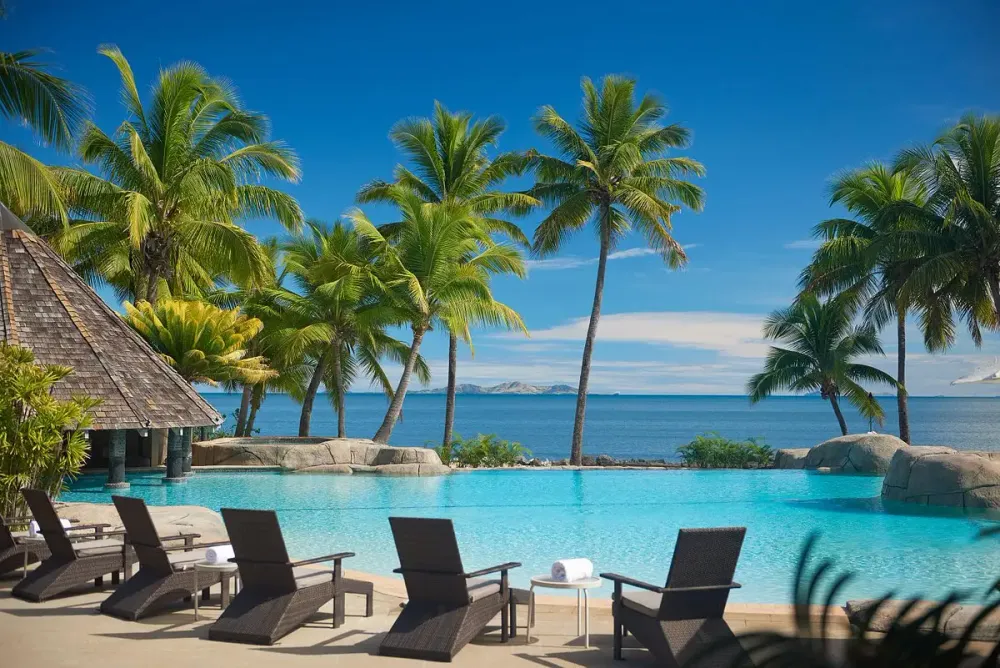
The resort breakfast is genuinely lovely. Freshly cut tropical fruit, eggs cooked to order, strong coffee, a view of the water, and someone bringing everything to your table. It is hard to argue with, particularly on a holiday. But at FJD $45 (around AUD $32) per person — a price that is not unusual at a mid-range Fijian resort — that breakfast costs more than a local family in Nadi might spend on food for an entire day. And that gap, between resort pricing and the real cost of eating in Fiji, is worth understanding before you book your first meal.
This is not an argument against eating at your resort. Resort food in Fiji ranges from acceptable to genuinely impressive, and the convenience of not leaving the property is real, especially on a short trip. But for travellers who want to understand where their money is going, stretch their budget, or simply experience a side of Fiji that the resort buffet cannot show them, knowing the actual numbers — and what you get for them on both sides of the gate — makes a substantial difference to how you plan your days.
What Resort Dining Actually Costs
Fiji’s resorts operate a wide range of food and beverage pricing, and the variation between properties is significant enough that generalising is genuinely difficult. What can be said with reasonable confidence is that dining at your resort, for every meal, every day, is an expensive proposition by any international comparison.
Breakfast is the meal where resort pricing most regularly surprises travellers. At mid-range properties, a buffet or plated breakfast typically runs FJD $30 to $55 (around AUD $21 to $38) per person if it is not included in your room rate. Many resorts include breakfast in certain room packages, which can make the headline room price look higher while appearing to offer value — but the cost is real either way, buried in the rate you have already paid. If you are booking a room-only rate, budget separately for breakfast rather than assuming it is covered.
Lunch at a resort beach bar or casual restaurant sits in the FJD $25 to $50 (around AUD $17 to $35) range for a main meal — a burger, a seafood pasta, a grilled fish plate. These meals are usually well-presented and suited to the physical context: you are on a sun chair, there is a pleasant view, and the food arrives cold-drinking-water-and-a-smile. The food itself is generally competent without being remarkable. It is the setting you are partly paying for.
Dinner is where resort pricing escalates meaningfully. At a decent mid-range Fijian resort, a three-course dinner with a main, a glass of wine or a cocktail, and dessert typically costs FJD $50 to $120 (around AUD $35 to $84) per person. At the upper end of the market — the boutique and premium island properties — FJD $120 to $200 or more (around AUD $84 to $140 or more) per person for dinner is not unusual, and speciality dining experiences can go higher still. These prices are not a Fijian anomaly. Premium resort destinations worldwide follow similar logic: isolation from alternatives, high operating costs for imported ingredients, and an audience that is largely captive all contribute to pricing that bears little relationship to local economic conditions.
Drinks add up in a way that is easy to underestimate. A glass of wine at a resort restaurant typically costs FJD $12 to $22 (around AUD $8 to $15). A cocktail runs FJD $15 to $30 (around AUD $10 to $21). Two people eating dinner with two drinks each at a mid-range resort can comfortably spend FJD $200 to $250 (around AUD $140 to $175) for the evening. It is not a shocking figure in the context of premium resort travel, but it is worth having in your awareness.
What Local Eating Costs
Step outside the resort gate, or along the Coral Coast, or into Nadi’s town centre, and the economics of eating in Fiji change entirely. This is not a case of slightly cheaper versions of the same food — it is a fundamentally different price bracket, reflecting what Fijian people actually pay for food in their daily lives.
The most striking entry point is the market stall. Roti and curry — a flatbread filled with spiced lentils, potato, or meat, wrapped in paper and handed over a counter — costs FJD $3 to $6 (around AUD $2 to $4) at Nadi’s municipal market or from roadside vendors throughout the main island. This is a full, satisfying meal. The dhal puri and the curried chicken rotis found at Nadi market or in the surrounding Indo-Fijian suburbs have been refined over generations of home cooking brought to commercial kitchens, and they taste like it.
A full sit-down meal at a local Indian or Fijian restaurant — a curry with rice and sides, or a fresh fish dish with cassava and coconut cream — typically costs FJD $10 to $20 (around AUD $7 to $14) per person. Restaurants of this calibre exist throughout Nadi, Lautoka, Sigatoka, and Pacific Harbour, serving a local and tourist clientele and operating on margins that have nothing to do with the resort economy. The quality, at its best, is as good as any resort meal at a fraction of the cost.
Produce from local markets represents extraordinary value for travellers with access to a kitchen or who simply want fresh fruit during their stay. A pawpaw (papaya) — ripe, sweet, and large enough to serve two — costs FJD $1 to $2 (around AUD $0.70 to $1.40). Fresh pineapple, watermelon, and seasonal tropical fruit are comparably priced. Buying breakfast produce from a local market and eating it on your accommodation’s veranda is one of the most cost-effective and genuinely pleasurable ways to start a Fiji morning.
Fish and chips at a local shop — a solid, unpretentious meal that shows up throughout Fiji’s coastal towns — runs FJD $8 to $15 (around AUD $5.60 to $10), depending on the size of the serve and the location. And a fresh coconut from a roadside stall, handed to you with the top machete-cut and a straw, costs FJD $1 to $2 (around AUD $0.70 to $1.40) and is, on a hot afternoon, one of the better purchases available anywhere in the country.
The Quality Question
Cost comparison becomes complicated when the question of quality enters the picture, because the answer is less straightforward than resort marketing would suggest. Resort food in Fiji is generally reliable and well-presented. The ingredients are usually fresh, the execution is consistent, and the experience of eating in a well-designed dining room with attentive service is genuinely pleasant. But “reliable and well-presented” is not the same as “memorable or exceptional,” and for many travellers, the most memorable food experiences in Fiji happen outside the resort entirely.
A fresh curry at a Nadi market stall, made by someone whose family has been cooking this recipe in Fiji for four generations, has a depth of flavour and a cultural authenticity that a resort curry — usually adapted for international palates, made in bulk, kept in bains-marie — rarely matches. A grilled fish at a Pacific Harbour restaurant, sourced that morning, cooked simply and served with local greens, competes with anything on a resort menu at a fraction of the price. The quality floor of local eating in Fiji is not high — there are mediocre local restaurants as there are everywhere — but the ceiling, at the best local establishments, is genuinely impressive and rarely reflected in the price.
The resort dining experience that is most difficult to replicate locally is the premium island dinner: an intimate beachfront setting, exceptional service, and the sense of occasion that a purpose-built fine dining environment creates. If that experience is something you value on holiday, it is worth paying for once. It is not worth replicating at every meal.
Why Eating Locally Matters Beyond Cost
Stepping outside the resort to eat is one of the most efficient ways to understand Fiji as a country rather than as a beach backdrop. Fiji’s food culture is inseparable from its history, and that history is visible in every curry house, every roti stall, and every market.
The large Indo-Fijian population — descendants of labourers brought to Fiji by the British colonial government between 1879 and 1916 to work the sugarcane fields — has woven an entire culinary tradition into the Fijian fabric. The roti, the dhal, the curried preparations, the flavoured tea sold from roadside stalls: these are living evidence of one of the Pacific’s most complex colonial histories, carried forward in everyday food in a way that no resort menu card can convey. Eating at a family-run Indo-Fijian restaurant in Nadi or Sigatoka is a small but real act of engagement with that story.
Indigenous Fijian food — built around root crops (taro, cassava, yam), coconut, and fresh fish, often cooked in the traditional lovo earth oven — is available at cultural experiences and certain local restaurants, and eating it is a direct connection to the villages and traditions that predate the tourist economy by centuries. The lovo feast at a Fijian village, where meat and vegetables are wrapped in banana leaves and cooked underground with heated stones, is not available at most resort restaurants; it requires seeking it out. The effort is minimal and the experience is significant.
Practical Challenges and How to Manage Them
The honest version of this comparison acknowledges that eating locally is not always straightforward for resort guests, and the barriers are worth addressing directly.
Distance is the most significant. Some Fijian resorts — particularly the island properties in the Mamanucas and Yasawas — have no local restaurants within any reasonable distance because there is simply nothing nearby. On a remote island resort, you eat at the resort; there is no other option, and this is understood when you book. For these travellers, the comparison in this article is largely academic, and the focus should be on understanding resort pricing accurately rather than imagining alternatives that don’t exist.
For travellers based on the main island — in Nadi, Denarau, along the Coral Coast, or near Pacific Harbour — local eating is entirely accessible but requires a taxi or rental car. Nadi’s town centre is a short and inexpensive taxi ride from most Denarau resorts; the fare is typically FJD $10 to $15 (around AUD $7 to $10) each way. The Coral Coast has local restaurants and market stalls accessible from the highway, though some are more walkable than others depending on your specific resort’s location.
Food safety is a concern that some travellers raise, and it is worth addressing without either dismissing or overstating. Fiji’s local restaurants and market stalls operate under the same regulatory framework as resort kitchens, and the standard at reputable local establishments is generally high. As with any destination, the practical guidance is to eat at places with visible turnover, fresh ingredients, and food that is freshly cooked rather than sitting under heat lamps. A busy market stall at lunchtime, where the roti and curry is being made constantly to keep up with demand, is a more reliable indicator of freshness than an empty local restaurant that has been keeping food warm since morning.
A Practical Strategy
The most sensible approach for most travellers is a deliberate hybrid: use your resort for the meals where convenience matters most, and make a specific plan to eat locally at least once or twice during your stay.
Breakfast at the resort is the most defensible resort meal, particularly if it is included in your room rate. The morning logistics of getting two people organised, into a taxi, and to a local café before 9am while on holiday are genuinely inconvenient, and the cost saving is modest compared to the friction involved. Eat breakfast at the resort without guilt.
Dinner at the resort makes sense on at least one or two nights — particularly for an occasion, a special evening, or simply when the day has been full and the appetite for adventure is low. One premium resort dinner experience, chosen thoughtfully and enjoyed fully, is a perfectly reasonable use of holiday budget.
The middle ground — lunch, and at least one or two dinners — is where eating locally rewards the effort. A taxi into Nadi for a market lunch costs a fraction of a resort beach bar meal and delivers an experience the resort cannot replicate. A dinner at a recommended local restaurant near Pacific Harbour or in Sigatoka introduces a side of Fiji that the resort economy does not show. These meals do not require significant planning or local expertise — they require only the willingness to leave the gate.
Final Thoughts
The gap between resort dining and local eating in Fiji is not incidental — it is structural, and understanding it changes how you see the holiday economy you are participating in. A full day of resort meals can cost FJD $150 to $250 (around AUD $105 to $175) per person. A full day of thoughtfully chosen local eating, including a sit-down lunch and dinner, might cost FJD $30 to $50 (around AUD $21 to $35) per person — and the food, at its best, is more culturally interesting and often more delicious.
None of this demands austerity or a rejection of the resort experience that most people are travelling to Fiji to have. It asks only for awareness: knowing what you are paying, understanding what you would get elsewhere, and making at least a few deliberate choices to eat outside the resort bubble. The roti stall at Nadi market, the local restaurant in Sigatoka, the roadside coconut on a hot afternoon — these are not compromise options. They are the taste of the real Fiji, and they are available to every traveller who walks through the gate.
Frequently Asked Questions
Is food at Fijian resorts worth the cost?
Resort food in Fiji is generally well-prepared and reliably presented, and the dining experience — particularly at beachfront restaurants with good service — is genuinely pleasant. Whether it is worth the cost depends on your priorities. If convenience, setting, and a managed dining experience are important to you, resort meals deliver those things consistently. If value, cultural authenticity, and memorable flavour are your priorities, local restaurants and market stalls frequently outperform resort dining at a fraction of the price. For most travellers, a balanced approach — some resort meals, at least a few local meals — gives the best of both.
Where can you eat cheaply in Fiji?
The best value eating in Fiji is at local markets and Indo-Fijian restaurants in Nadi, Lautoka, Sigatoka, and Pacific Harbour. Nadi’s municipal market is the most accessible starting point for travellers based on the western side of Viti Levu — roti and curry from FJD $3 to $6 (around AUD $2 to $4), fresh produce at extraordinarily low prices, and a genuinely lively local atmosphere. Town restaurants along the Coral Coast serve full meals for FJD $10 to $20 (around AUD $7 to $14) per person. Roadside coconuts and fruit stalls throughout the main island offer refreshment and snacks for FJD $1 to $2 (around AUD $0.70 to $1.40).
Is it safe to eat at local restaurants and market stalls in Fiji?
For most travellers, yes. Fiji’s local restaurants and market stalls operate under standard food safety regulations, and the quality at reputable, busy establishments is generally high. The practical guidance is the same as anywhere: choose places with visible turnover, eat food that has been freshly cooked rather than reheated, and apply the same basic judgement you would use at home. A busy roti stall at Nadi market is a very different proposition from a quiet roadside shack with food that has clearly been sitting. As with any international destination, a small number of travellers experience mild digestive issues when adjusting to unfamiliar ingredients or spices — this is not the same as a food safety problem and is managed easily with normal precautions.
Do remote island resorts in Fiji have local eating alternatives?
In most cases, no. Remote island resorts in the Mamanuca and Yasawa island groups operate as effectively self-contained properties — there are no local restaurants nearby because there is no nearby town. Travellers at these properties will eat at their resort for every meal, and this is entirely expected. The cost comparison in this article is most relevant for travellers staying on Viti Levu’s main island — in the Nadi, Denarau, or Coral Coast areas — where access to local restaurants and markets is practical and straightforward. If you are booking a remote island resort, factor full resort dining costs into your holiday budget from the outset.
By: Sarika Nand