Published
- 21 min read
Fiji: What Has Changed in the Last 10 Years
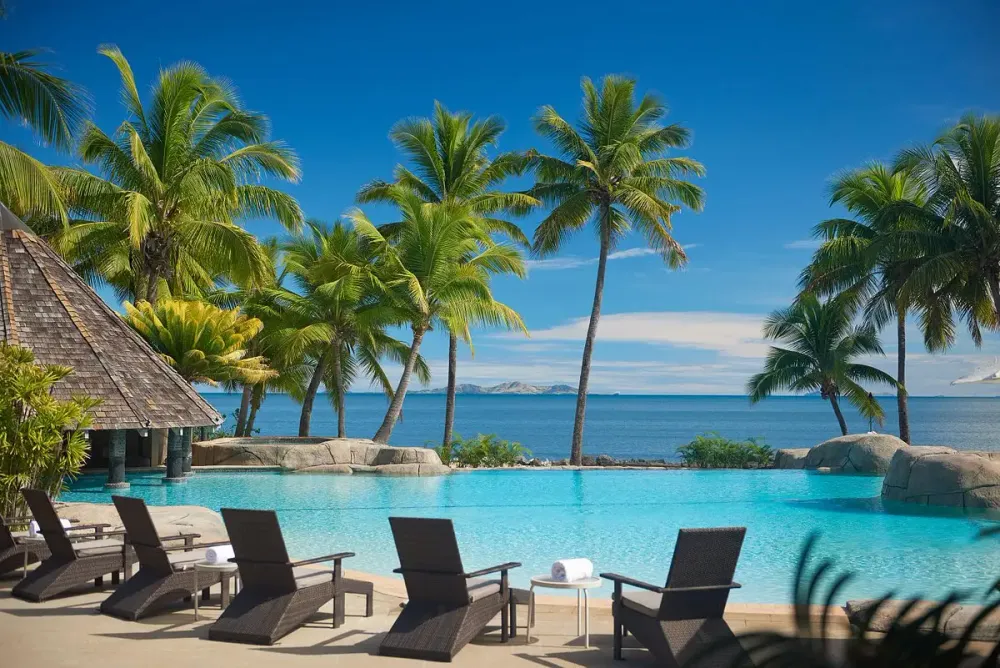
Ten years ago, Fiji was a destination that most people understood in fairly simple terms: a scattering of beautiful islands in the South Pacific, a place you visited for turquoise water, luxury resorts, and the particular warmth of the Fijian welcome. That understanding was not wrong, but it was incomplete. The Fiji of 2025 is measurably different from the Fiji of 2015 — not in its landscapes or its culture, but in the infrastructure that surrounds it, the type of traveller arriving, the range of experiences available, and the cost of accessing all of it. If you went a decade ago and are thinking about returning, you will find a destination that has matured, expanded, and in some ways reconfigured itself around a global tourism market that has itself changed dramatically.
That evolution has been uneven. Some changes are unambiguously positive — better flight connectivity, a broader range of accommodation, a more developed mid-range dining scene, and a genuine expansion of adventure and eco-tourism that was barely formalised in 2015. Others are more complicated: prices have risen significantly, certain hotspots feel considerably busier than they once did, and the post-pandemic recovery has reshaped resort economics in ways that affect the everyday experience of being a traveller in Fiji. Understanding what has changed — and what, crucially, has not — is the most useful preparation you can do before booking a return trip.
Getting There: Flights, Routes, and Connectivity
One of the most practical and consequential changes of the past decade is in how Fiji is accessed. In 2015, Fiji Airways was already operating as the national carrier, but the international route network was considerably thinner than it is today. For travellers from Europe, North America, and even parts of Asia, reaching Nadi typically required a connection through Sydney, Auckland, or Los Angeles, adding time, cost, and logistical friction to a journey that was already substantial.
Fiji Airways has systematically expanded its network over the intervening years, adding and strengthening direct routes that have meaningfully reduced travel time for key markets. Direct services from Los Angeles to Nadi have become more reliably scheduled and have seen improved frequency, which partly explains the noticeable increase in American visitors — a shift in the traveller mix that is obvious to anyone who spent time in Fiji earlier in the decade. Routes from Singapore and Hong Kong have improved connectivity for Asian markets. For Australian and New Zealand travellers, who have always been the dominant source markets, the competition between Fiji Airways and various regional carriers has, in some years, produced more accessible airfare options than were typically available in 2015, though the pandemic disrupted this significantly and fares have been volatile in the post-COVID period.
Port Denarau has also undergone meaningful development. The marina precinct that serves as the departure point for the vast majority of island day trips, cruises, and ferry services to the Mamanucas and Yasawas has expanded its commercial footprint substantially. The dining, retail, and hospitality offering at Denarau today is considerably more developed than it was a decade ago — it functions as a genuine arrival and departure hub rather than simply a jetty. For travellers spending time in the Nadi area before island-hopping, this represents a real improvement in convenience.
The Rise of Beach Clubs and Day Experiences
If one category of Fijian tourism has transformed almost entirely over the past ten years, it is the day-trip experience market — and at its centre is the beach club phenomenon that Cloud 9 effectively launched and that Malamala Beach Club brought to its fullest expression.
Cloud 9 — the floating platform moored in the Mamanuca group with its pizza restaurant, bar, and swimming platform — had only been operating for a year or two in 2015 and was not yet the fixture it has since become. By the mid-2020s it has been thoroughly absorbed into the standard Fiji day-trip repertoire, featured in countless social media posts and reviewed hundreds of thousands of times. Malamala Beach Club, operating from a tiny private island just 25 minutes from Port Denarau, opened in 2016 and within a few years had redefined what a Fijian day trip could look like — an all-inclusive beach club experience with swimming pools, overwater structures, restaurant-quality food, and a full bar, all on an island small enough that you can walk its circumference in a few minutes. A full-day pass at Malamala runs approximately FJD $350 to $450 per person (around AUD $245 to $315) depending on the package, which would have seemed an extraordinary price point for a day outing in 2015. It does not seem to have constrained demand.
The broader day-experience market has matured alongside these flagship operations. River tubing on the Navua, the Sigatoka River jet boat safari, village visits in the highlands, and the various zipline and cave combinations in the Sabeto Valley are all considerably more polished and better marketed than they were a decade ago. Operators have invested in better boats, better guides, better safety equipment, and — importantly — better online booking systems that allow travellers to research and purchase experiences before they arrive rather than through hotel activities desks upon check-in. This shift toward pre-arrival booking has changed the economics of the experience sector and has allowed smaller, specialist operators to reach international audiences that were previously inaccessible to them.
How Social Media Reshaped the Map
The Fiji of 2015 was photographed and shared, certainly, but the era of Instagram as a primary discovery mechanism for travel destinations had not yet fully arrived. The years between 2016 and 2020 changed this profoundly, and the effects on where travellers go within Fiji — and what they expect when they get there — have been significant.
The Yasawa Islands, always beautiful and always visited, became dramatically more prominent in the global travel consciousness as drone photography and Instagram accounts brought their landscapes to audiences who had no previous awareness of them. The combination of the Blue Lagoon’s extraordinary colour, the Sawa-i-Lau limestone caves, and the visual drama of the island silhouettes produced content that circulated widely enough to shift the destination’s reputation from “a Fiji extension for people who have been before” to “a primary destination in its own right.” Resorts in the Yasawas that were operating at modest occupancy in 2015 have in subsequent years had to manage the entirely different challenge of high demand at limited capacity.
Nadi itself — long treated primarily as a transit hub rather than a destination — has gained a more genuine profile through social media coverage of the Sri Siva Subramaniya temple, the municipal market, and the range of local food and cultural experiences now well-documented online. The temple, one of the largest Hindu temples in the Southern Hemisphere, has always been visually extraordinary, but its presence in international travel content has grown substantially over the past decade, drawing visitors who might previously have spent their Nadi time solely at the Denarau resort strip.
The cloud-nine moment of this social media shift — and its double-edged nature — is perhaps best illustrated by the experiences that went from regional knowledge to global itinerary staple in a matter of years. The Biausevu Waterfall tour from the Coral Coast, the thermal pools at Sabeto, and the Sigatoka Sand Dunes have all seen significant growth in visitor numbers, driven substantially by content recommendation. For some of these sites, visitor management has improved to handle the increased traffic. For others, the growth has outpaced infrastructure, and the experience at peak season is genuinely different from what it was when visitor volumes were lower.
Accommodation: The Mid-Range Has Arrived
Fiji’s accommodation landscape a decade ago was relatively stark in its stratification. At the top sat the celebrated luxury resorts — Laucala, Qualia, Kokomo, the various Mamanuca properties with their overwater bures — operating at price points that placed them firmly in the aspirational tier. At the bottom sat the backpacker circuit, anchored by the Yasawa Island hostel boats and the various budget properties in Nadi. The middle ground was thin.
That middle ground has been substantially built out over the past ten years. A combination of local investment, international boutique hotel brands entering the Fiji market, and the maturation of the Airbnb ecosystem has created a genuine mid-range accommodation tier that simply was not available in 2015. Self-contained villas and apartments in Nadi, Denarau, and the Coral Coast available on short-term rental platforms have given travelling families and longer-stay visitors flexibility that the traditional resort model did not offer. Boutique properties on the outer islands — smaller than the major resorts, independently owned, positioned on quality reef and beach — have filled a gap between the backpacker guesthouses and the FJD $2,000-plus-per-night properties. The traveller arriving in Fiji in 2025 with a budget in the FJD $300 to $600 per night range (roughly AUD $210 to $420) has genuinely good options that their 2015 equivalent would have struggled to identify.
This diversification has been particularly significant for solo travellers, who have grown as a proportion of Fiji’s visitor mix. The 2015 version of Fiji was designed, at almost every level, for couples and families. The solo traveller was accommodated in a way that often felt like an afterthought — single supplements were steep, social dining was awkward at properties designed for two, and the activity infrastructure was overwhelmingly couple-focused. The growth of boutique properties with communal spaces, the maturation of the hostel-plus tier (properties too polished to be traditional backpacker hostels but serving a similar social function), and the general normalisation of solo travel as a demographic have made Fiji meaningfully more navigable for people travelling alone.
Post-COVID Pricing and What It Means for Value
The COVID-19 pandemic closed Fiji’s borders from March 2020 to November 2021 — nearly two years during which the country’s tourism-dependent economy contracted severely. The reopening brought pent-up demand meeting reduced capacity, and the economic consequences of that combination — combined with global inflation, supply chain disruption, and the cost of rebuilding a hospitality workforce that had dispersed during the closure — produced a significant upward shift in prices that has not fully reversed.
To be direct about it: Fiji is more expensive in 2025 than it was in 2015, and not marginally so. A benchmark exercise on accommodation, meals, and activities across comparable categories reveals price increases that exceed general inflation in most source markets. A mid-range resort room that cost FJD $250 to $350 per night a decade ago now typically costs FJD $380 to $550 (approximately AUD $265 to $385) for a comparable product. Restaurant meals at resort-adjacent dining in Nadi and Denarau have followed a similar trajectory. Activities and day trips have seen consistent year-on-year increases, driven partly by higher operating costs and partly by the increased demand that social media visibility has generated.
The honest assessment of value is complicated. In absolute terms, Fiji is a more expensive destination than it was in 2015. In comparative terms — relative to comparable tropical island destinations in the Maldives, Bora Bora, or even parts of the Caribbean — Fiji still offers a quality-to-price ratio that represents genuine value for many travellers. The luxury tier remains competitive internationally. The mid-range has improved in quality alongside its price. The backpacker tier, while no longer as strikingly cheap as it once was, still provides access to genuinely beautiful island experiences at prices well below comparable destinations. The traveller who arrives with a realistic sense of current costs, having done current research rather than relying on decade-old pricing memories, will find Fiji rewarding. The traveller who arrives expecting the prices they paid on a previous trip a decade ago will find the experience dissonant.
Adventure Tourism and Eco-Experiences
The adventure tourism sector in Fiji in 2015 existed but was fragmented — a collection of operators, some excellent and some not, offering experiences that varied enormously in quality, safety standards, and environmental practice. The decade since has seen significant consolidation and professionalisation, partly through industry self-regulation and partly through the growing expectations of international travellers who arrive having researched their operators thoroughly.
Shark diving at Beqa Lagoon, river adventures on the Navua and Sigatoka, zipline operations in the Sabeto Valley, hiking in the Koroyanitu National Heritage Park — all of these have seen investment in safety infrastructure, trained and certified guide programmes, and the kind of operational consistency that allows them to be reliably recommended rather than treated as variable propositions. New experiences have been formalised and added to the repertoire: guided eBike tours through sugarcane villages near Nadi, stand-up paddleboard tours through mangrove systems, kayaking programmes built around reef snorkelling, and cultural immersion experiences in highland villages that are meaningfully different from the performative “village visit” that characterised some of the earlier cultural tourism offerings.
The eco-experience category is perhaps the most genuinely new development of the past decade. In 2015, environmental tourism in Fiji was represented primarily by dive operator reef-protection messaging and a handful of conservation-focused accommodation providers. In 2025, it is a recognisable market segment with its own infrastructure. Marine conservation volunteer programmes, reef restoration dive experiences, community-based tourism operators channelling revenue to village conservation projects, and accommodation providers built around solar energy and zero-waste operations are all accessible and bookable. This is a real change, driven by a genuine shift in traveller values and by Fijian operators and communities recognising both the environmental imperative and the commercial opportunity.
Environmental Awareness and Reef Protection
Fiji’s relationship with its environment has always been close — the reef systems that make the country one of the world’s great dive destinations are also the ecological foundation of coastal communities whose livelihoods, food security, and cultural identity are inseparable from the ocean. But the formal expression of that relationship through policy and practice has advanced considerably over the past decade.
The plastic bag ban, introduced in 2017, was one of the Pacific region’s earliest and most comprehensive retail plastic restrictions and has meaningfully reduced the volume of single-use plastic visible in coastal and marine environments. Coral reef protection legislation, managed through a combination of government regulation and community-controlled fishing grounds (the traditional qoliqoli system), has become more coherent and better enforced in many areas. Several key reef systems have been designated as Marine Protected Areas with genuine enforcement rather than nominal protection, and the dive industry has broadly adopted reef-safe sunscreen requirements and mooring buoy systems that eliminate anchor damage at popular sites.
The visible condition of Fiji’s reefs in 2025 compared to 2015 is a mixed picture. In well-managed protected areas — Beqa Lagoon, Rainbow Reef near Taveuni, sections of the Mamanuca reef systems — reef health is good and in some cases has improved measurably as protection has taken effect. In high-traffic areas with less rigorous management, the pressures of increased visitor numbers and the ongoing effects of coral bleaching events associated with warming ocean temperatures have produced visible degradation. The environmental picture is not uniformly positive, but the trajectory of intent and policy is meaningfully better oriented than it was a decade ago.
The Traveller Mix Has Shifted
The profile of who arrives in Fiji has changed in several ways that are worth understanding, partly because they affect the experience of being there.
The American market has grown substantially, driven by the improved direct flight connectivity from Los Angeles and the accumulated effect of years of social media visibility in a market that was previously not a major source of Fiji visitors. American travellers tend to arrive with different expectations around service standards, resort amenities, and activity packaging than the Australian and New Zealand travellers who have historically dominated the market, and Fiji’s resort industry has adapted to accommodate this — with measurable effects on the experience product offered by major properties.
The Chinese market, which grew significantly in the years before COVID, has recovered more slowly than other source markets in the post-pandemic period. The Japanese and Korean markets, which have traditionally focused on honeymoon and luxury travel in Fiji, remain present and are served by a well-established niche within the resort sector. Indian-Fijian cultural tourism — drawing visitors of Fijian-Indian heritage from Australia, New Zealand, and directly from India to connect with a diaspora culture that is deeply embedded in Fiji’s social fabric — is a quietly significant and underreported part of the visitor mix.
The solo traveller, as already noted, is a more prominent figure than a decade ago. The backpacker circuit through the Yasawas, always cosmopolitan, has if anything become more structured and more easily navigated by first-time visitors, with well-documented routes and strong online review infrastructure making the independently planned island-hopping trip accessible to a much wider range of travellers. And the working holiday visitor — arriving on a tourist visa, planning a stay of weeks rather than days, working remotely in the Nadi and Coral Coast area while spending weekends island-hopping — is a figure who barely existed in the Fiji tourism landscape a decade ago and who now represents a genuine, if still relatively small, part of the visitor ecosystem.
What Has Not Changed
It would be possible to read this account of Fiji’s evolution over the past decade and conclude that the country has been remade by tourism, globalisation, and commercial development in a way that has diluted whatever made it special. That conclusion would be wrong.
The warmth and authenticity of Fijian hospitality is one of the most frequently remarked-upon qualities of the country by first-time visitors, and it is the quality that returning visitors most consistently report as unchanged. The Fijian greeting — the directness of the welcome, the genuine quality of the engagement — is not a trained resort performance. It is a cultural practice rooted in the concept of kerekere, the obligation of generosity and sharing that runs through Fijian social life at every level. No amount of resort development or social media attention appears to have meaningfully affected it. Travellers who arrive in Fiji for the first time in 2025 will encounter the same quality of welcome that their predecessors described in 2015, in 2005, and long before.
The landscapes are similarly unchanged. The ocean around Viti Levu is the same improbable shade of turquoise. The Yasawa island silhouettes against a late afternoon sky are precisely as dramatic as they have ever been. Taveuni’s interior, the waterfalls of Bouma, the soft coral density of Rainbow Reef — these things are as they were, and no amount of additional visitor infrastructure has altered the fundamental visual reality of the country. And the village life of highland Fiji — the kava ceremonies, the meke performances, the communal rhythms of Fijian communities that have absorbed tourism as one thread of a more complex social and economic fabric — remains something that a visitor who makes the effort to access it will find genuinely moving and genuine rather than staged.
Fiji has changed significantly over the past ten years. It is more connected, more expensive, more socially-media-visible, and more professionally organised than it was in 2015. But it remains, in its essential character, something that very few other destinations in the world can offer: a place whose extraordinary natural environment is matched by a human warmth that is neither performed nor exhausted by the volume of people who come seeking it.
Final Thoughts
Returning to Fiji after a decade, or arriving for the first time with an informed sense of what has evolved, means setting aside the version of the destination that circulated in travel conversation ten years ago. The logistics are smoother — flights are more direct, booking systems are better, mid-range accommodation actually exists. The experience market is deeper and more professionally delivered. The environmental conversation is more genuinely embedded in how operators and communities think about what they are doing and why. The prices are higher, and there is no useful way to frame that as anything other than a material change that travellers need to budget for realistically.
What the destination offers in exchange is still, for the traveller who approaches it with realistic expectations and a genuine openness to what is actually there, one of the most rewarding experiences the Pacific has to deliver. The beach clubs and the improved roads and the Instagram-famous viewpoints are additions to what was already extraordinary. The reef is still extraordinary. The welcome is still extraordinary. For travellers who knew the Fiji of 2015, the Fiji of 2025 is a familiar country that has grown up considerably, without having lost the things that made it worth travelling to in the first place.
Frequently Asked Questions
Is Fiji more expensive than it was 10 years ago?
Yes, meaningfully so. Across accommodation, dining, and activities, prices in 2025 are substantially higher than comparable options in 2015, with increases accelerated by the post-COVID reopening, global inflation, and the cost of rebuilding hospitality operations. A mid-range resort room that cost FJD $250 to $350 per night in 2015 now typically sits between FJD $380 and $550 (approximately AUD $265 to $385). Activities and day trips have followed a similar trajectory. Fiji remains competitive in value terms relative to comparable luxury island destinations globally, but travellers relying on decade-old pricing expectations will find the experience jarring.
What new experiences are available in Fiji that were not there 10 years ago?
The beach club day-trip market — led by Cloud 9 and Malamala Beach Club — is largely a product of the past decade and represents a genuinely new category of Fijian tourism experience. The formalisation of eco-tourism and reef conservation dive programmes, the emergence of guided eBike tours and SUP reef tours near Nadi, and the much-improved online booking infrastructure for adventure operators are all developments that did not exist or were barely formalised in 2015. The mid-range accommodation tier, including boutique island properties and short-term rental options in Nadi and the Coral Coast, is also new in any meaningful sense.
Has Fiji’s reef improved or declined over the past decade?
The picture is mixed and depends heavily on location. In well-managed Marine Protected Areas — including sections of Beqa Lagoon, Rainbow Reef near Taveuni, and parts of the Mamanuca system — reef health has been maintained and in some cases improved through active protection. In high-traffic areas without rigorous management, increased visitor pressure and coral bleaching events linked to rising ocean temperatures have caused visible degradation. Environmental policy has improved substantially over the past decade, including Fiji’s 2017 plastic bag ban and strengthened fishing ground protections, but the global challenge of ocean warming affects Fijian reefs irrespective of local management.
Is it easier to get to Fiji now than 10 years ago?
For most major source markets, yes. Fiji Airways has expanded its international route network significantly over the past decade, improving direct service from North America, Asia, and maintaining strong connections from Australia and New Zealand. The increased frequency of direct flights from Los Angeles has been particularly significant in growing the American visitor market. Transit hub requirements have reduced for travellers from some markets. Booking platforms and online travel infrastructure have also made planning a Fiji trip considerably more straightforward than it was in 2015.
What has NOT changed about Fiji in the past decade?
The fundamental character of the destination — its landscapes, its marine environment, and above all the quality of its human welcome — has not changed. The warmth of Fijian hospitality, rooted in deep cultural traditions of generosity and community, is remarked upon as consistently by 2025 visitors as it was by those who travelled a decade earlier. The visual reality of the islands — the colour of the water, the quality of the reefs in protected areas, the dramatic landscape of the Yasawas and the interior of Viti Levu — is unchanged. Village life and cultural practices in communities that engage with tourism remain authentic and accessible to visitors willing to make the effort to reach them.
How has the type of traveller visiting Fiji changed?
The American visitor is significantly more prominent than a decade ago, driven by improved direct flight access and social media visibility in a market that was previously a secondary source. Solo travellers are more numerous and better catered for, as the accommodation and experience market has diversified beyond the couple-and-family orientation that dominated in 2015. Remote workers using Fiji as a longer-stay base — a category that barely existed in 2015 — represent a small but growing segment. The Chinese market, which grew rapidly in the pre-COVID years, has recovered more slowly post-pandemic. The Australian and New Zealand markets remain the dominant source of visitors by volume.
By: Sarika Nand