Published
- 15 min read
Fiji Through Local Eyes: What Tourists Always Get Wrong
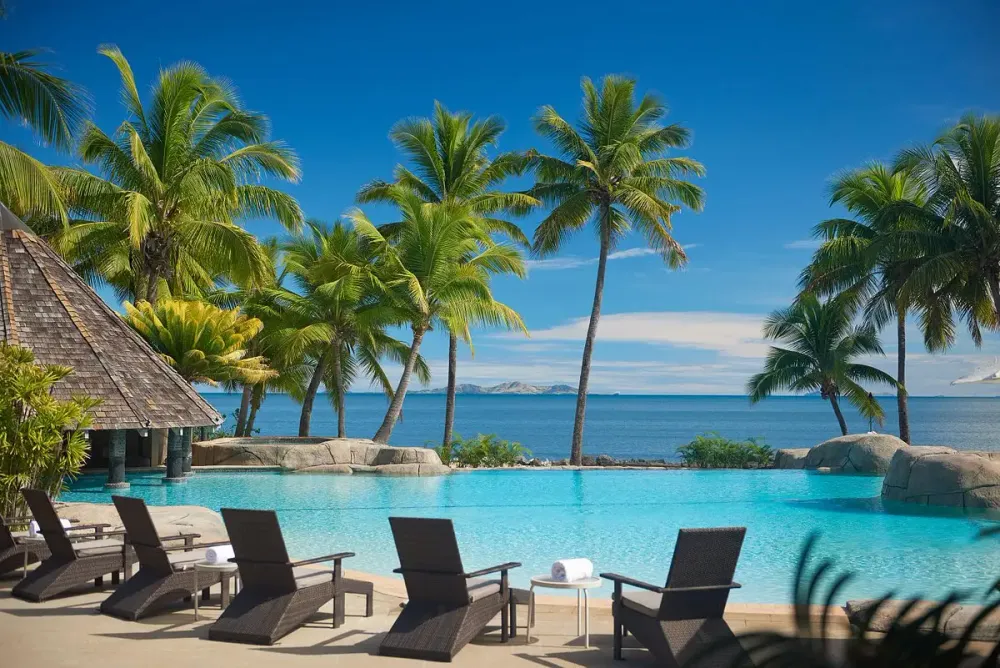
There is a version of Fiji that exists entirely in travel brochures, and it is not entirely wrong. The water genuinely is that colour. The resorts genuinely are that beautiful. The welcome you receive when you arrive genuinely is that warm. But the brochure version is a narrow slice of a country with a layered history, multiple distinct cultures, a complex political past, and a population of nearly a million people who live real, complicated, economically pressured lives entirely outside the frame of any tourism campaign. Most visitors never trouble themselves to look past the edge of the photograph, and Fiji’s hospitality industry is so smoothly calibrated to meet expectations that it rarely pushes back.
This is not an article that criticises tourists. Most people who come to Fiji arrive with goodwill and genuine enthusiasm, and those things are a reasonable foundation for respectful travel. What follows is simply a collection of the most common misconceptions about Fiji that locals quietly observe in visitors — the assumptions so ingrained that most people carrying them don’t realise they are assumptions at all. Getting these things right doesn’t require research or effort. It requires the same quality you’d apply in any unfamiliar country: curiosity, attentiveness, and a willingness to let the place be more complicated than you expected.
Misconception One: All Fijians Are the Same
Fiji is not a culturally homogeneous country, and the word “Fijian” covers considerably more ground than most visitors appreciate. The two major ethnic communities are the iTaukei — indigenous Fijians, who make up approximately 57 per cent of the population — and Indo-Fijians, descendants of indentured labourers brought from India under British colonial rule between 1879 and 1916, who make up approximately 38 per cent. These two communities have distinct languages, religious traditions, food cultures, social structures, and historical relationships to land and political power that are as different from each other as any two neighbouring cultures could be. Smaller communities — Rotumans, part-Europeans, Chinese Fijians, and other Pacific Islanders — add further texture to a national identity that is still, in many ways, actively negotiated.
The cultural gap between an iTaukei village elder performing a sevusevu ceremony and an Indo-Fijian family running a market stall in Nadi town is not incidental. It reflects a history of colonial labour practices, land tenure politics, and intermittent political turbulence that has shaped both communities profoundly and continues to shape the country’s institutions. When visitors treat Fiji as a single, undifferentiated “culture,” they miss not only the richness of what is actually here but also the complexity that makes Fiji genuinely interesting as a place. A meal in a Fijian Indian restaurant in Suva is not the same cultural experience as a village lunch in the Yasawas; both are equally Fijian, and both deserve to be recognised as such.
Misconception Two: Fiji Is Just Resorts and Beaches
The resort corridor between Nadi and the Coral Coast, the Mamanuca Islands, and the southern Yasawas is the version of Fiji that most visitors experience, and it is genuinely magnificent. But it is perhaps 15 per cent of what Fiji actually is. Suva, the capital, is a proper Pacific city — complex, politically active, architecturally layered, and home to the kinds of cultural institutions (a respected national museum, a university, a sophisticated restaurant and bar scene, a vigorous civil society) that don’t feature on any resort promotional material. The highlands of Viti Levu are a world away from the coastal resorts: cool, forested, cultivated in ways that reflect centuries of agricultural tradition. The Lau Group, the remote eastern archipelago, is essentially a separate Fiji that most visitors couldn’t locate on a map.
Fiji has a rich arts scene that operates almost entirely below the tourism radar. The country has produced significant visual artists, writers, musicians, and filmmakers. It hosts meaningful cultural events and intellectual life. Its agricultural traditions — sugar cane, dalo (taro), and tropical fruits — are not picturesque backdrops but functioning industries that employ a substantial portion of the population and carry cultural weight in both the iTaukei and Indo-Fijian communities. The political history alone — coups in 1987, 2000, and 2006; a decade of military governance; constitutional transitions that are still settling — is a subject of genuine complexity that shapes how Fijians understand their country and their future. None of this appears in a resort brochure, but all of it is part of the country you have chosen to visit.
Misconception Three: Fijians Are Always Smiling and Happy
Fijian hospitality is, by any measure, genuinely extraordinary. The warmth of a Fijian welcome — “Bula!” called across a car park, a conversation begun with total strangers, the instinctive generosity with time and attention — is not commercially manufactured. It reflects something real in the cultural fabric, and visitors who receive it rightly feel that they have encountered something special. The problem is not with the warmth itself but with the way it is sometimes interpreted: as evidence that Fijians are a perpetually contented people for whom the normal difficulties of life don’t apply, and whose role is to remain cheerful components of someone else’s holiday experience.
Resort and hospitality staff in Fiji have mortgages, sick children, political opinions, financial anxieties, and social lives. They experience grief, frustration, professional ambition, and a range of emotions that have nothing to do with tourism. The expectation — sometimes stated explicitly, more often simply assumed — that Fijian service staff should maintain a continuous performance of sunny contentment regardless of their own circumstances is a form of reduction that flattens real human beings into decorative elements. Treating staff as people — learning their names, engaging with them as individuals, acknowledging rather than ignoring the asymmetry between a visitor’s holiday budget and a local wage — costs nothing and changes the nature of an interaction entirely. Genuine warmth, in any culture, flows both ways.
Misconception Four: Kava Is a Tourist Experience
Kava — known in Fiji as yaqona — is one of the first things most visitors encounter and one of the most consistently mishandled. At resorts and on day cruises, a kava ceremony is often presented as a colourful cultural introduction, and visitors drink from the bilo (coconut shell cup) and clap and say “Bula!” and move on to the buffet. There is nothing wrong with this as an introduction. The problem is when it exhausts a visitor’s engagement with kava as a subject, because what they have participated in is a surface rendering of something that goes considerably deeper.
Kava is a serious ceremonial and social drink. The sevusevu — the traditional presentation of kava by a visitor to a village chief — is not a performance arranged for tourists. It is a genuine protocol that establishes the visitor as a respected guest and places obligations of care and hospitality on the host community. Getting it right (arriving with an appropriate bundle of dried yaqona root, presenting it correctly, sitting with the appropriate posture and attentiveness, clapping and drinking in the prescribed manner) signals respect for the people you are visiting and for the institution of village governance. Getting it wrong — treating it as amusing, being ironic about the taste, treating the bilo as a photo opportunity — communicates something quite different. The ceremony is real. Approach it accordingly.
Kava is also simply how Fijian social life is conducted. In iTaukei communities, kava circles are where relationships are maintained, disputes are mediated, news is shared, and decisions are made. The bowl is always open; the conversation moves slowly and without hurry; the rules of the circle are observed because they reflect the value placed on community and on time spent together. This is not an artifact or a relic. It is contemporary Fijian social life, and it is genuinely worth understanding.
Misconception Five: Villages Are Quaint
Village visits have become a standard element of Fiji tourism itineraries, and at their best they are genuinely valuable — a chance to engage with iTaukei community life, to understand how people actually live, and to participate, briefly and as a guest, in customs and hospitality that are both ancient and contemporary. At their worst, they become something closer to cultural performance, where villagers are expected to provide an experience of “traditional Fijian life” that satisfies the visitor’s image of what that should look like.
The people living in Fijian villages are not museum exhibits. They use smartphones. They watch rugby. They have Facebook. They send their children to universities. They have political opinions about land rights and development and climate change — the last of which is not an abstract concern for Pacific communities watching their coastlines. The expectations visitors sometimes carry — that a village should look authentically “traditional,” that modernity is somehow a contamination of the real thing, that the people they encounter should be performing culture rather than living it — reflect a romanticisation of poverty and rural life that would be unacceptable if applied anywhere in the visitor’s home country.
Village visits are most meaningful when they proceed from genuine curiosity rather than from a desire to have an experience that matches a prior image. Ask questions. Listen to answers. Accept the hospitality without condescension. Understand that what you are being shown is a courtesy extended to you as a stranger, not a service you have purchased.
Misconception Six: You Don’t Need to Cover Up
Fiji’s resort culture creates a specific set of expectations about dress, and those expectations do not extend to the rest of the country. Beachwear, bare shoulders, and short shorts are entirely appropriate at a resort pool or on a boat cruise. They are not appropriate in villages, in markets, in temples, in government buildings, in most shops in Nadi town, or in the vast majority of public spaces where ordinary Fijian life takes place.
This is not a uniquely Fijian cultural norm — modest dress is expected in public spaces across the Pacific and across much of the world. In Fiji specifically, the expectation applies across both iTaukei and Indo-Fijian communities, though for different cultural and religious reasons. Entering a village or a Hindu temple in swimwear is not a small oversight; it communicates a disregard for where you are and for the people whose spaces you are entering. The easy adjustment is to carry a sulu (the wraparound cloth worn throughout the Pacific) or a light shirt when you are away from resort grounds. Resort staff will tell you the same thing if you ask; the fact that many visitors don’t ask, or don’t follow the advice, is one of the things that locals notice most consistently.
Misconception Seven: Tips Are Unnecessary Because the Cost of Living Is Low
Fiji has a dual economy in which the price of a resort room and the cost of a bag of dalo at a local market bear almost no relationship to each other. Local food, public transport, and market goods are priced for a local population with a local income. Resort prices, tour costs, and activity packages are priced for international visitors whose spending power is calibrated to Australian, New Zealand, US, or European income levels. The existence of cheap local food does not mean that resort staff are cheap labour.
Resort workers in Fiji typically earn wages that are modest by Australian or American standards but are, in many cases, above the Fijian average wage — particularly for skilled roles in tourism. This is not a reason to be complacent about tipping. Service staff in Fiji depend on the hospitality sector as a primary source of income, and the relationship between international visitor spending and local economic welfare is direct. Tipping is not universally expected and is not a cultural norm in the way it is in the United States, but acknowledging exceptional service — a guide who goes beyond what was required, a staff member who helped you navigate something difficult — is always appropriate and always appreciated.
What Fiji Actually Has: Kerekere
It is worth ending on what is genuinely true about Fiji, because the corrective tone of the above should not obscure the fact that visiting Fiji is, by any reasonable measure, a privilege. The warmth of the Fijian welcome is real. The beauty of the country is real. And underneath the resort hospitality industry there is a social culture that is genuinely distinctive and worth understanding on its own terms.
The iTaukei concept of kerekere — loosely translatable as communal sharing and mutual obligation — describes a social ethic in which people within a community have an acknowledged right to request things from one another, and an obligation to share what they have. It is not a commercial transaction and it is not charity; it is a form of reciprocal social bond that distributes resources across a community and creates networks of mutual responsibility. This ethic is the cultural foundation on which Fijian hospitality rests. When a Fijian welcome feels genuinely warm rather than professionally enacted, it is because it is drawing on something that predates the tourism industry by centuries. Understanding that changes the nature of receiving it.
Fiji welcomes visitors. It has always welcomed visitors. The difference between a visit that is merely pleasant and one that is genuinely meaningful is the willingness to accept the country as something more than the image you arrived with — to let it be complicated, layered, and real. That is always available. Most visitors simply don’t think to reach for it.
Final Thoughts
The misconceptions that most visitors carry about Fiji are not malicious. They are the product of a tourism industry that, by necessity, presents a simplified and beautiful version of a complex place, and of the entirely human tendency to take that simplification at face value. Fiji is a country with a rich cultural plurality, a complicated history, a contemporary political life, and a population of nearly a million people navigating the same pressures and aspirations as people anywhere. It also happens to have extraordinary natural beauty and one of the most genuinely warm hospitality cultures in the world.
Travelling here well doesn’t require an academic grounding in Fijian history or fluency in iTaukei or Fiji Hindi. It requires the same qualities that make for good travel anywhere: paying attention, being willing to be surprised, extending the same basic respect to the people you meet that you would want extended to you. The rewards of that approach, in Fiji, are considerable. The country has a great deal to offer the visitor who is genuinely curious about it — far more than the brochure version suggests, and far more than most people who visit ever discover.
Frequently Asked Questions
What is the difference between iTaukei Fijians and Indo-Fijians?
iTaukei are the indigenous people of Fiji, comprising approximately 57 per cent of the population, with cultural traditions rooted in the archipelago’s pre-colonial history. Indo-Fijians are descendants of labourers brought from India under British indenture between 1879 and 1916, comprising approximately 38 per cent of the population. The two communities have distinct languages, religions, food cultures, and relationships to land and political structures. Both are Fijian citizens; both contribute significantly to Fijian national life; and both communities are far more internally diverse than the simplified categories suggest. Treating them as a single undifferentiated “Fijian culture” misses most of what makes the country genuinely interesting.
What is the kava ceremony and how should visitors approach it?
Kava (yaqona) is a ceremonial and social drink made from the ground root of the Piper methysticum plant. The sevusevu — the formal presentation of kava by a visitor to a village chief — is a genuine cultural protocol that establishes a visitor as a respected guest and places obligations of hospitality on the host community. It is not a tourist performance. Visitors should arrive with an appropriate bundle of dried yaqona root (available from local markets), present it with both hands, sit cross-legged and attentively during the ceremony, accept the bilo (coconut shell cup) with both hands, clap once before drinking and three times after, and avoid treating the occasion with irony or levity. Approaching the ceremony with genuine respect is both appropriate and, in practice, far more rewarding than treating it as entertainment.
What should visitors wear in Fijian villages and public spaces?
Modest dress is expected in all villages, markets, temples, government buildings, and general public areas. Shoulders should be covered, and shorts or skirts should fall at least to the knee. Swimwear is appropriate at resort pools and on beaches and boats but not in any other setting. A sulu — the wraparound cloth worn throughout the Pacific — is inexpensive, lightweight, and covers most situations; carrying one when travelling away from resort grounds is a straightforward way to avoid giving inadvertent offence. Many resorts will provide sulus for village visits if asked; the fact that many visitors do not ask, and are not always proactively told, does not mean the expectation doesn’t apply.
Is it worth visiting Suva and other non-resort areas of Fiji?
Yes, emphatically. Suva is a proper Pacific capital city with a national museum, vibrant markets, a university, a sophisticated food scene, and a cultural and political life that provides a very different picture of Fiji from the resort corridor. The Sigatoka Valley, the highlands of Viti Levu, the Coral Coast, and the more remote island groups all offer experiences that the Mamanuca and southern Yasawa resort circuit does not. Visitors who extend their itinerary beyond the standard resort areas consistently report that their understanding of Fiji was transformed by doing so. The infrastructure for independent travel on the main island of Viti Levu is reasonable, and many tour operators offer day trips or multi-day packages to areas that most resort guests never see.
By: Sarika Nand