Published
- 23 min read
Fiji Marriott Resort Momi Bay: A Complete Guide
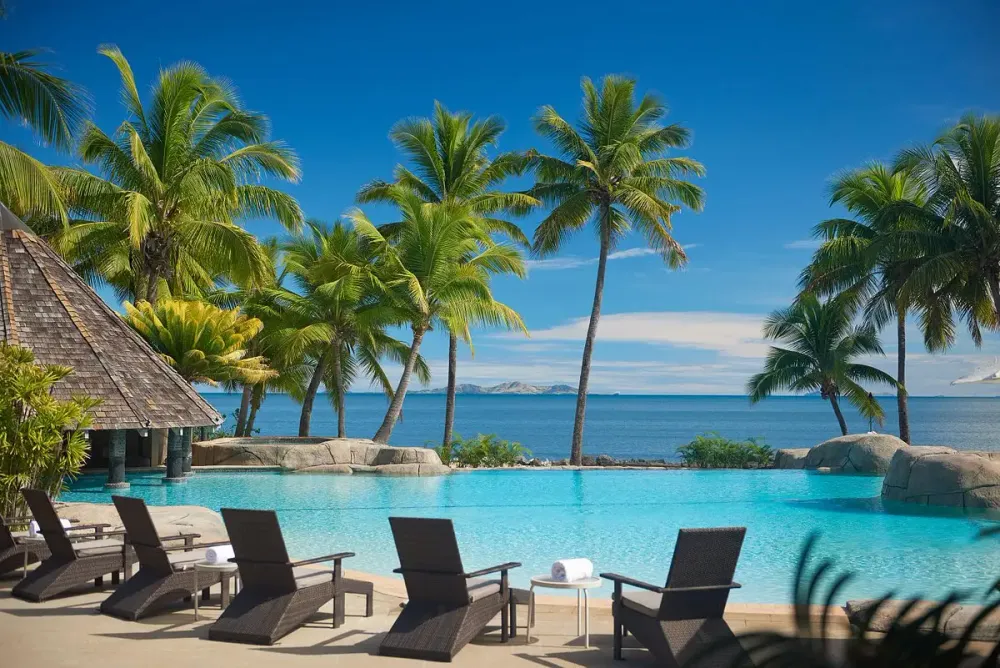
Fiji Marriott Resort Momi Bay opened in 2018 as one of the more significant hotel launches the country had seen in years, and not simply because of the Marriott name. What made it immediately notable was the accommodation it brought with it: overwater bures sitting directly above a protected lagoon on the western coast of Viti Levu. Outside of Likuliku Lagoon Resort in the Mamanuca Islands, genuine overwater accommodation in Fiji is extraordinarily rare. The Marriott at Momi Bay changed that, offering the over-water experience on the main island and placing it within the reach of Marriott Bonvoy points redemptions that a remote luxury lodge never could.
The resort occupies a private bay at Momi Bay, roughly 45 minutes south of Nadi International Airport along Queens Road toward the Coral Coast. That positioning matters. Momi Bay is far enough from the Denarau resort strip to feel meaningfully removed from the packaged holiday precinct, yet close enough to Nadi to remain practical for international travellers arriving on long-haul flights. The bay itself provides a sense of enclosure and seclusion that the open Denarau waterfront cannot replicate — you’re looking across your own sheltered lagoon rather than sharing a strip of shoreline with half a dozen competing resorts.
It is worth being clear from the outset about what this resort is and what it isn’t. It is a sophisticated, full-service international hotel with genuinely distinctive overwater accommodation, a well-considered spa, and the operational reliability that the Marriott brand has spent decades earning. It is not a remote outer island. It sits on the main island of Fiji, and the lagoon, while beautiful and protected, is the calm, shallow-water variety that characterises western Viti Levu rather than the vivid deep blue of the open Pacific. For travellers who understand that distinction and value what the Marriott does well, this is an excellent resort. For those chasing the isolation of the Yasawa Islands or the coral gardens of the outer Mamanucas, it serves better as a base than a destination in itself.
Location & Getting There
Momi Bay lies on the western coast of Viti Levu, off Queens Road between Nadi and Sigatoka. From Nadi International Airport, the drive takes approximately 45 minutes under normal conditions — less if traffic through the Nadi town area cooperates, occasionally more during busy periods. The resort sits well south of the Denarau resort precinct, past Nadi town and through the sugarcane country of the Fijian lowlands before the road descends toward the coast at Momi Bay.
Transfer options include the resort’s own pre-arranged transfer service, private taxis booked through the airport, and rental car — though it’s worth noting that driving in Fiji is on the left, and the Queens Road has sections that require attentiveness, particularly after dark. For most international visitors arriving after a long flight, a pre-arranged resort transfer is the most sensible option. The Marriott’s transfer service can be booked in advance and avoids the negotiation and variable quality of unmetered taxis at the airport.
What distinguishes Momi Bay’s location from Denarau — despite both being on Viti Levu — is the private bay itself. The resort doesn’t share its waterfront with neighbouring hotels. The bay curves around the property in a way that creates a genuine sense of arrival and enclosure. There’s no marina precinct or adjacent retail strip. The result is a quieter, more self-contained atmosphere than Denarau delivers, even though you’re still on the main island and Queens Road is not far away. Travellers who want to access the Sigatoka Valley, the Coral Coast, or even Pacific Harbour for shark diving have the advantage of being further down the road and better positioned for day excursions in those directions.
Overwater Bures
The overwater bures are the defining feature of this property and the main reason many travellers choose it over other options on Viti Levu. They extend from the shore on stilts above the lagoon, and in concept they deliver what overwater accommodation is supposed to deliver: waking up with the sound of water beneath you, stepping through glass floor panels to look directly into the lagoon below, and swimming down a ladder from your private deck into the water at any hour you choose.
In practice, the experience here is genuinely special, but it’s worth being honest about what the Momi Bay lagoon is. This is a sheltered, shallow-water lagoon on the western coast of the Fiji main island. The water is warm, clear by most measures, and perfectly pleasant for swimming. It is not the electric cobalt-and-turquoise of the Maldives, and it does not have the depth or the reef profile that accompanies Maldives overwater bungalows. At low tide, the lagoon becomes quite shallow, which is relevant if you’re imagining plunging straight off your deck into metres of clear water. At higher tide the depth is more satisfying, and the overall experience — the privacy, the outlook, the sound of water, the direct access — absolutely holds up.
Each overwater bure has a private deck with sun loungers and an unobstructed view across the lagoon. Glass floor panels are inset into the bure interior, allowing you to watch small fish moving below without leaving your room. The ladder into the water from the deck is a feature that quickly becomes addictive — an early morning swim before the rest of the resort stirs is one of those experiences that stays with you. Interior appointments are designed to a high Marriott standard: generous bed configuration, considered bathroom design with a deep soaking tub and outdoor shower elements, and climate control that functions well in the Fijian heat and humidity.
Pricing for the overwater bures sits at a premium above the resort’s other room categories, as you’d expect. Rates vary with season and demand, but broadly the overwater bures represent the upper tier of the property’s pricing. For honeymooners or travellers who have specifically come to Fiji for the overwater experience, the premium is justified. For those who simply want comfortable accommodation and are weighing the overwater option against a beach villa, the choice depends on how much that particular experience matters to you — because it does carry a real cost difference.
Other Accommodation Categories
The overwater bures are the headline, but the resort offers a well-considered range of accommodation options for travellers who want something other than the overwater experience, or who are travelling with a configuration that makes the overwater bures impractical.
Beach bures sit directly on or very close to the shoreline, with private terraces or plunge pools depending on the category. These are particularly well suited to couples who want direct beach access and the privacy of a standalone bure configuration without the overwater premium. The beach bure design draws on traditional Fijian architectural forms — thatched roofing, natural materials, a sense of weight and permanence — while interior standards sit firmly in the international luxury register.
Pool villas represent the family-friendly end of the villa configurations, with private pools, larger floor areas, and the kind of indoor-outdoor living space that families with children find genuinely useful. Having a private pool means parents and younger children can swim without navigating the main pool area for every swim session, which matters more than it might sound when you’re trying to manage the rhythms of a family holiday.
The resort’s standard room categories — garden view and bay view configurations in the main building — provide a more conventional hotel room experience at a lower price point than the villa and bure categories. These are well appointed and meet a consistent Marriott quality standard, and for travellers who plan to spend most of their time at the pool and beach rather than in their room, the savings over the more premium categories can be significant. Bay view rooms in the upper floors offer genuinely attractive outlooks across the lagoon.
The Beach & Lagoon
The bay at Momi Bay is the resort’s strongest natural asset, and it works on its own terms. The lagoon is calm, protected from ocean swell by reef and the bay’s own geography, and warm throughout the year. The water clarity is good — not the visibility of a pristine outer reef, but clear enough for comfortable snorkelling and swimming. The beach itself has the off-white, slightly grey-toned sand characteristic of western Viti Levu, which is a different aesthetic from the powder-white beaches of the outer islands but is kept well maintained and is pleasant enough for a morning walk or an afternoon on a lounger.
The protected nature of the lagoon makes it well suited to paddleboarding and kayaking — the calm, wind-sheltered water means these activities are accessible to most fitness levels, and the lagoon’s enclosed feel makes it feel like your own private space rather than a public waterway. Swimming conditions are generally safe and comfortable, with the exception of low tide periods when the shallower sections of the lagoon become quite exposed. Checking the tide chart and timing your swimming accordingly is worth the small effort.
For travellers who want reef snorkelling beyond what the lagoon offers, the resort is positioned to facilitate day trips to the Mamanuca Islands, and the outer reef around Momi Bay itself has accessible dive sites. The Momi Bay area has some historical significance for wartime gun placements — the Momi Guns site is a short drive away — and the broader bay has more going on beneath the surface than the sheltered lagoon alone suggests.
Dining
The Marriott Momi Bay’s dining programme is competent and well matched to a resort of this type, anchored by a primary restaurant and a bar and lounge offering with room service completing the options.
Mimi’s Kitchen is the resort’s main restaurant, operating across breakfast and dinner, with a menu that balances Pacific-sourced ingredients with the broad international range that a Marriott-level property’s guests expect. The fish dishes are the strongest part of the menu — locally caught reef fish prepared simply and well, with a focus on quality ingredient rather than elaborate technique. The breakfast spread is substantial, combining a buffet of tropical fruit, pastries, and cold elements with a live cooking station for eggs and hot items. It is a genuinely good start to the morning and one of the stronger resort breakfasts on the main island.
The Bay Bar functions as the resort’s principal social space outside of the restaurant, offering an all-day menu of lighter dishes, cocktails, and wine alongside a casual atmosphere that suits the middle part of the day. The bar’s position with views over the lagoon and toward the overwater bures makes it a naturally pleasant spot to settle into, particularly in the late afternoon. The cocktail programme draws on Pacific ingredients — local fruits, Fijian rum — and is executed with enough care to distinguish it from generic resort bar offerings.
In-room dining operates across extended hours and is a practical option for guests in the overwater bures who want an evening meal without leaving the particular magic of their private deck. The kitchen maintains its standards across the room service menu, which is not always the case at resorts where in-room dining is treated as a secondary service. For a private dinner on your overwater deck with the lagoon reflecting the evening sky, this is an option worth taking.
The dining options at Momi Bay are good rather than exceptional, and travellers who place very high emphasis on the food and beverage programme as a standalone feature of a resort stay may find the range narrower than a larger city-adjacent property can offer. This is not a criticism unique to the Marriott here — it is a characteristic of smaller resort environments generally. What the restaurant does, it does well.
Facilities & Activities
The main pool at the Marriott Momi Bay is substantial and well designed, with an infinity edge that looks directly out over the lagoon and a layout that allows multiple uses — dedicated lap lanes, a shallower area with views toward the overwater bures, and a pool bar for guests who want food and drinks without leaving the water. The visual line between the pool surface and the lagoon beyond is one of the resort’s most photographed perspectives, and for good reason.
Watersports are run directly from the beach and jetty area, with kayaking, stand-up paddleboarding, and snorkelling gear available for guest use. The calm lagoon makes these activities accessible in a way that a more exposed beach location would not — there’s no surf to contend with, no current to manage, and the flat water means a first-time paddleboarder can get upright and moving without much difficulty. The resort also facilitates boat-based excursions to the Mamanuca Islands, meaning guests who want to experience the outer islands during their stay can do so without a full day of additional travel logistics. Day cruises, snorkelling trips to outer reefs, and sunset cruises can all be arranged through the resort’s activities concierge.
Fishing is another well-regarded activity from this part of the Fijian coast, and the resort can connect guests with charter fishing operators for reef fishing or game fishing trips offshore. The deeper channels west of Momi Bay hold the kind of pelagic fish — wahoo, mahi-mahi, tuna — that deep-sea fishing enthusiasts make specific journeys to pursue.
The fitness centre covers the standard international hotel equipment base — cardio machines, free weights, resistance equipment — in a well-ventilated space. For guests who want outdoor fitness options, the bay itself provides a pleasant circuit for early morning runs, and the resort’s yoga and wellness classes operate on a scheduled basis that changes with season and guest numbers.
Evening cultural programming draws on the traditions of the surrounding villages: meke performances, kava ceremonies, and Fijian music have all featured in the resort’s evening activity schedule. As with any resort presentation of Fijian cultural traditions, the depth of the engagement depends in part on the presentation and in part on what the guest brings to it — approaching these evenings with genuine curiosity rather than as spectacle makes a real difference to the experience.
The Spa
The spa at the Marriott Momi Bay draws on both international treatment techniques and Fijian botanical and cultural traditions, which is the appropriate approach for a property positioned as a serious luxury retreat. The menu includes massage modalities that range from deep tissue and hot stone work to traditional Fijian-inflected techniques using local coconut oil, tropical fruit extracts, and the kind of warm, unhurried approach that the better Fijian spa therapists bring naturally to their work.
Signature treatments include full-body wraps using local volcanic clay and coconut preparations, couples’ massage packages designed for honeymooners and anniversary guests, and a range of facial treatments calibrated to the particular effects of tropical sun and travel. The treatment rooms are individually designed with views where the site allows, and the overall facility is smaller and more intimate than the large resort spas found on Denarau — which can be an advantage if you prefer a quieter, less busy spa environment.
For honeymooners in particular, the spa represents a significant part of the resort’s offer. A couples’ treatment followed by private time in a relaxation area, with the option of an in-bure massage service for guests who want to stay on their overwater deck, covers the range of what most honeymooners are looking for from a resort spa. Booking treatments in advance is recommended for peak season visits; the spa’s smaller size means popular time slots fill quickly.
For Families
The Marriott Momi Bay accommodates families well, particularly in the pool villa category, where the private pool and additional space make a real practical difference to the rhythm of a family holiday. The lagoon environment is safe for confident child swimmers, and the protected bay means there’s no ocean swell or unexpected current to manage. Families with younger children often find this kind of enclosed lagoon setting significantly less stressful than an exposed beach.
The kids’ activity programme provides structured activities for children during core daytime hours, covering supervised pool sessions, beach activities, craft sessions, and introductory Fijian cultural content. The programme is run by staff trained in child supervision and activity facilitation, and operates with an age-appropriate structure that covers both younger primary school-aged children and older pre-teen guests.
The resort’s proximity to the Coral Coast and Pacific Harbour is an advantage for families wanting to add excursions during their stay. The Sigatoka Sand Dunes, the Kula Wild Adventure Park, and the cultural villages along the Coral Coast are all within manageable driving distance for a day trip, broadening the range of family experiences available beyond the resort itself.
For Couples & Honeymooners
For couples, and particularly for honeymooners, the overwater bure is the centrepiece of what this resort offers, and it is genuinely well suited to the purpose. The privacy of the overwater configuration — the sense of floating above the water with no neighbouring rooms visible, the direct access to the lagoon from your own deck, the glass floor panels creating the feeling of being suspended over the water — delivers the romantic atmosphere that the concept promises. This is not true of all overwater accommodation globally; some properties treat the overwater label as architectural marketing for what is effectively a room on a jetty. At Momi Bay, the execution is considered enough that the experience holds.
Private dining arrangements can be made through the concierge for special occasion evenings — a table positioned for the best lagoon view at Mimi’s Kitchen, or a private in-bure dining setup on the deck for guests who want the occasion to stay within their overwater sanctuary. Both options are achievable with advance notice. The resort’s team is experienced with honeymooner requests and handles the logistics without requiring the guests to micromanage the experience.
Spa packages for couples, sunset cocktails from the overwater deck, and the particular quiet of a bay that isn’t a busy marina precinct combine to make the Marriott Momi Bay one of the more compelling honeymoon options on Viti Levu. It does not compete on the axis of remote island isolation — Likuliku, Turtle Island, and the outer Mamanuca resorts own that category — but for couples who want the overwater experience with the connectivity and loyalty programme value of a major international hotel brand, it occupies the space almost uniquely.
Marriott Bonvoy
The Marriott Bonvoy loyalty programme is a significant practical consideration for the resort’s core audience, and worth understanding before you book rather than after.
The Fiji Marriott Resort Momi Bay participates fully in the Marriott Bonvoy programme. Points earn on all eligible spend at the property — room rate, dining, spa, and ancillary services — and the earn rate is consistent with Marriott’s standard global programme structure. For existing Bonvoy members with status, the standard elite benefits apply: enhanced room upgrades subject to availability, late checkout, welcome amenities, and the lounge access or bonus points alternatives that come with higher tiers.
The property’s category within the Bonvoy programme means it is accessible for points redemptions at rates that represent good value relative to the cash price of the overwater bures in particular. For points-rich Bonvoy members — frequent business travellers, credit card points accumulators — using a points redemption for an overwater bure stay at Momi Bay can represent the kind of outsized value that loyalty programme enthusiasts spend years positioning for. Checking the current award chart and comparing the points redemption cost against the cash rate is worth doing before you commit either way.
For first-time Bonvoy members, enrolling in the programme before booking is a straightforward decision — there is no cost, the points earn immediately, and the elite night credits towards status qualification begin accumulating from the first eligible stay. The programme’s broad footprint across Marriott’s global portfolio means the points and status earned at Momi Bay have value well beyond this one property.
Booking directly through the Marriott website or app is the most reliable way to ensure full Bonvoy benefits, lowest available rates, and the most flexible cancellation terms. Third-party booking platforms may offer competitive nominal rates but do not pass through loyalty benefits, and can carry more restrictive change and cancellation conditions — which is particularly relevant for Fiji bookings, where weather and cyclone risk during the November–April period makes cancellation flexibility a genuine practical consideration.
Honest Assessment
The Fiji Marriott Resort Momi Bay excels in a specific and well-defined set of areas. The overwater bures are the resort’s standout feature and represent one of a very small number of opportunities in Fiji to have a genuine overwater experience without travelling to a remote outer island. The Marriott Bonvoy integration creates real value for loyalty programme members and makes the property accessible at points redemption rates that a boutique property could never match. The private bay setting achieves a meaningful degree of seclusion from the Denarau resort-strip context without adding significant travel distance from the airport.
The spa is good. The pool is genuinely attractive. The lagoon is calm, accessible, and well suited to water-based leisure. The staff — drawing on the natural warmth that is one of Fiji’s most consistent and reliable hospitality assets — are a genuine pleasure to interact with across the duration of a stay.
Where expectations need managing is primarily in the nature of the setting. The Momi Bay lagoon is sheltered and protected, and the water has the characteristics of an enclosed bay on the western coast of Viti Levu. It is not a deep, turquoise-blue, coral-garden lagoon of the kind you see in Maldives overwater photography. At low tide, its shallowness is pronounced. The underwater world accessible directly from the overwater bures is interesting rather than spectacular.
The dining programme is competent and at times quite good, but the range is narrow relative to what a larger resort with multiple concept restaurants can offer. Guests who want significant culinary variety during a week-long stay may find the options feel repetitive by the latter part of their visit.
And for all that the bay location provides a measure of seclusion, this is still Viti Levu. Queens Road is audible at certain wind directions. The view from the resort is of the bay and the hills of the Fijian main island rather than the open Pacific horizon. For travellers who have genuinely set their hearts on the feeling of being on a remote tropical island, that disconnect will be present regardless of how well the resort itself performs. For those who understand and accept the Viti Levu context and value what the Marriott brand brings to it, this resort is a genuinely strong choice.
Final Thoughts
The Fiji Marriott Resort Momi Bay has carved out a clear and defensible niche in Fiji’s accommodation landscape. By placing genuine overwater bures on a private bay within 45 minutes of Nadi International Airport, and integrating the experience with one of the world’s most widely used hotel loyalty programmes, it has created an offer that has no direct equivalent on the main island. The combination of Marriott Bonvoy redemption value, operational reliability, a well-executed spa, and the overwater accommodation category makes it a property that suits its target audience very precisely.
For honeymooners who want the overwater experience without the disconnection of a remote outer island, for Bonvoy points enthusiasts looking to redeem toward something genuinely memorable, and for travellers who want a well-run luxury base from which to explore the Coral Coast and the Mamanuca Islands, the Marriott Momi Bay is an easy recommendation. Go in understanding what Momi Bay is — a beautiful protected bay on Viti Levu, not the open Pacific — and the resort rewards you with everything it does well.
Frequently Asked Questions
Where is the Fiji Marriott Resort Momi Bay located?
The resort is at Momi Bay on the western coast of Viti Levu, Fiji’s main island. It sits off Queens Road between Nadi and Sigatoka, approximately 45 minutes by road from Nadi International Airport. It is not a remote island property — it is on the main island — but the private bay setting gives it a more secluded feel than the Denarau resort precinct further up the coast.
Does the Fiji Marriott Resort Momi Bay have overwater bures?
Yes. The overwater bures are the resort’s signature accommodation category, sitting on stilts above the Momi Bay lagoon with glass floor panels, private decks with sun loungers, and direct water access via a ladder. Outside of Likuliku Lagoon Resort in the Mamanuca Islands, genuine overwater accommodation in Fiji is very rare, which makes the Marriott Momi Bay notable within the local market.
What is the lagoon like at Momi Bay?
The lagoon is calm, protected, and warm — well suited to swimming, paddleboarding, and kayaking. The water clarity is good. However, the lagoon is sheltered and relatively shallow, particularly at low tide, and does not have the vivid deep blue and coral garden characteristics of Maldives overwater lagoons. It is genuinely beautiful on its own terms; the key is to understand what type of lagoon it is before arriving with Maldives-style expectations.
How do I get to the resort from Nadi Airport?
The most convenient option for most travellers is the resort’s pre-arranged transfer service, which can be booked in advance and takes approximately 45 minutes along Queens Road. Taxis are available from the airport but are unmetered, so agreeing on a fare in advance is advisable. Rental cars are an option for guests who plan to self-drive during their stay, noting that driving in Fiji is on the left.
Is the Fiji Marriott Resort Momi Bay good for families?
Yes. The pool villa category offers private pools and generous floor space well suited to families. The protected lagoon is safe for children comfortable in the water. A structured kids’ activity programme operates during core daytime hours with trained staff. The resort’s position on Queens Road also makes Coral Coast family day trips — to the Sigatoka Sand Dunes, Kula Wild Adventure Park, and cultural sites — practical without excessive travel time.
How does Marriott Bonvoy work at this property?
The resort participates fully in the Marriott Bonvoy programme. Points are earned on eligible spend including room rate, dining, and spa. Elite status benefits apply including upgrades, late checkout, and welcome amenities. The property is available for points redemptions, and for points-rich members the overwater bure categories can represent strong redemption value relative to cash rates. Enrol in Bonvoy before booking and book directly through the Marriott website or app to ensure full programme benefits.
When is the best time to visit the Fiji Marriott Resort Momi Bay?
The dry season from May to October offers the most reliably pleasant conditions: lower humidity, predominantly clear skies, and comfortable temperatures in the mid-to-high twenties Celsius. July to September is the peak period with highest demand and rates. The shoulder months of May, June, and October provide a good balance of good weather and more competitive pricing. The wet season from November to April brings higher humidity, warmer temperatures, and a greater likelihood of rain, but also the lowest rates. Cyclone risk is present between November and April, making travel insurance with cancellation coverage a practical consideration for those months.
By: Sarika Nand