Published
- 30 min read
Exploring the Coral Coast: Everything You Need to Know
The first thing to clarify about the Coral Coast is what it actually is, because Fiji’s geography is often misrepresented in travel marketing. The Coral Coast is not an island. It is not a resort precinct. It is a stretch of the Queens Road — Fiji’s main southern highway — that runs roughly 80 kilometres along the southern coast of Viti Levu, from Momi Bay in the west to Pacific Harbour in the east. It is a living, working coastline with towns, villages, farmland, fishing communities, ancient heritage sites, and a string of resorts that have been operating here since the early years of Fijian tourism. When you travel the Coral Coast, you are travelling through Fiji as it actually is, not a sanitised version of it built specifically for visitors.
The comparison that matters most is with Denarau Island, which is the resort hub most first-time visitors to Fiji know best. Denarau is a reclaimed island 6 kilometres from Nadi connected to the mainland by a single causeway. It is purpose-built for tourism — there are no permanent Fijian communities there, no local markets, no history predating the resort developments, and nothing to do beyond the facilities that the large hotel properties provide. It is comfortable and convenient, and for families or travellers who want a traditional resort holiday with pool, beach, and all-inclusive options, it works perfectly well. But it is not, in any meaningful sense, Fiji. The Coral Coast is Fiji: the smells of a cane field after rain, the sound of a bus slowing for a village, the sight of women selling cassava by the road, the volcanic hills behind the coast green with jungle and dotted with farms that have been worked for generations.
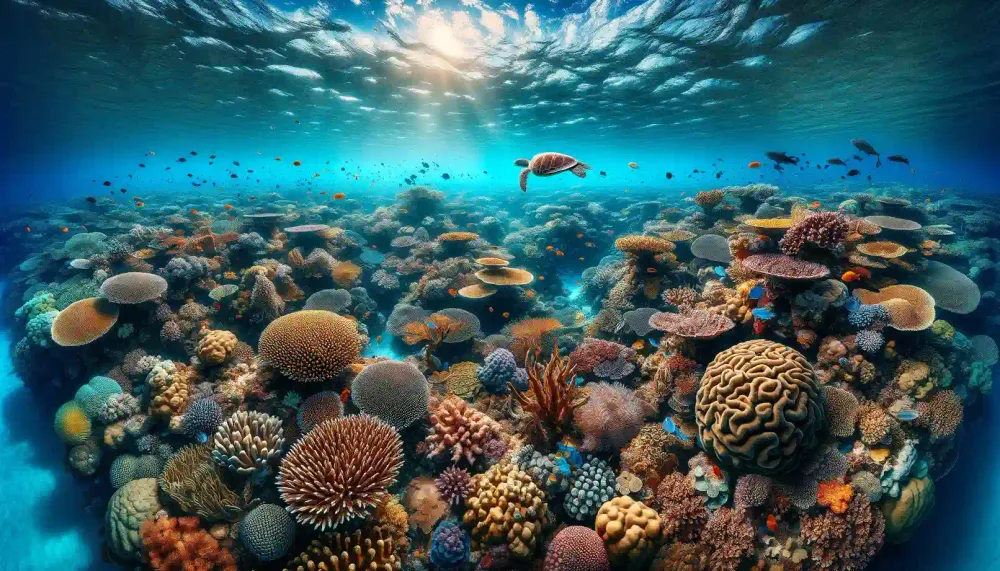
The second thing to understand is the beaches. The Coral Coast’s shoreline is not white sand. The beaches here are dark — grey and black volcanic sand, the product of the volcanic geology that built these islands. This is not a flaw in the product and it is not something to be disappointed about. The Coral Coast’s attraction is the reef, not the beach. A fringing reef runs along much of the coastline, accessible by snorkelling and diving, and the water quality and reef health in many sections are genuinely excellent. The dark sand gives the water a different quality of colour — deep blue-green rather than the fluorescent turquoise of the white-sand Yasawa beaches — and in certain light it is beautiful in its own way. Set expectations accordingly and the Coral Coast will exceed them. Arrive expecting Yasawa Island, and you will miss what is actually on offer.
Getting There and Getting Around
The Coral Coast runs along the Queens Road, and arriving here from Nadi or Denarau is straightforward: you simply drive south. The road is well-maintained for its entire length, sealed throughout, and clearly signposted. Sigatoka, the main town on the Coral Coast, is approximately 60 kilometres from Nadi and roughly a 45-minute drive without stops. Pacific Harbour, at the eastern end of the Coral Coast, is about 100 kilometres from Nadi — allow 90 minutes to two hours depending on traffic through Sigatoka.
Rental car is strongly recommended if your budget allows it and you are comfortable driving on the left. Having your own vehicle on the Coral Coast transforms the experience: you can stop at the roadside lookouts, detour into Sigatoka for lunch, pull in at the sand dunes on a whim, and reach the smaller villages and trailheads that tour buses don’t serve. The Queens Road is a good, manageable road for drivers of all experience levels — it is not a challenging driving destination. Rental cars are available from all major companies at Nadi Airport (Avis, Budget, Hertz, and local operators such as Khan’s Rental Cars and Central Rentals). Rates start from around FJD $120–$170 per day for a small vehicle. International driving licence or a valid home country licence is accepted. Petrol stations are available in Sigatoka and at intervals along the coast — don’t let the tank run low past Pacific Harbour heading east.
Local buses serve the entire Queens Road route and are extraordinarily cheap — a ticket from Nadi to Sigatoka costs around FJD $4–$6, and a full journey through to Pacific Harbour is under FJD $10. The trade-off is time and flexibility: local buses are slow, stop frequently, and run on their own schedule rather than yours. That said, the bus journey along the Queens Road is a genuinely enjoyable experience if you approach it without urgency — you sit among local commuters, pass through villages and towns, and get a ground-level view of daily Fijian life that no resort transfer provides. Buses depart from the Nadi Bus Stand (on Hospital Road in Nadi town, not from Denarau) and run throughout the day into the early evening.
Tour operators running day trips from Nadi and Denarau provide the most popular gateway to the Coral Coast for resort-based visitors. Almost every Coral Coast attraction — the sand dunes, Sigatoka River Safari, Biausevu Waterfall, Naihehe Cave, Kula Wild Adventure Park — is reachable as an organised day tour from Denarau-area hotels, with pickup included. This is the practical option for travellers staying on Denarau or at Nadi area hotels who want to visit specific attractions without committing to a rental car. The limitation is that you are on the operator’s schedule and typically see only what the tour covers. For anyone spending two or more nights on the Coral Coast itself, a rental car remains the better option.
The Resorts
The Coral Coast’s resort strip developed from the 1960s onwards, and the properties range from large-scale international-branded hotels to small boutique lodges and family guesthouses. Unlike Denarau, where all the major properties are clustered within a few hundred metres of each other, Coral Coast resorts are spread along 80 kilometres of coast — meaning that where you stay shapes the experience of the coast considerably.
Fiji Marriott Resort Momi Bay sits at the western end of the Coral Coast, at Momi Bay approximately 30 kilometres from Nadi. This is the newest and most architecturally ambitious property on the coast — a large, beautifully designed resort built around a network of lagoon pools with a series of overwater bures extending out over the bay. The overwater accommodation here is among the most photographed in Fiji, and the resort is the obvious choice for couples seeking a romantic, high-end base from which to explore the wider Coral Coast. Being at the western end, it’s the most convenient for day trips back to Nadi and into the Mamanucas, but slightly more isolated from the Sigatoka and eastern Coral Coast attractions. Rates start from around FJD $900 per night for garden-view rooms and FJD $1,800+ for overwater bures.
InterContinental Fiji Golf Resort & Spa sits near Natadola Beach, one of the Coral Coast’s best stretches of lighter sand. The property is one of the most polished on the coast — a large, well-maintained resort with an 18-hole golf course, multiple pools, and a proper spa operation. Natadola Beach itself is one of the coast’s genuine exceptions: a long, white-sand beach that is dramatically different from the volcanic-sand stretches elsewhere along the Queens Road. The InterContinental is well-positioned for both the Natadola beach experience and day trips into the Sigatoka region. Rates from around FJD $700–$1,000 per night.
Outrigger Fiji Beach Resort in the Korotogo area just west of Sigatoka is one of the Coral Coast’s most established properties and a consistent performer. It’s a large resort with multiple restaurant and bar options, a well-regarded Kids’ Club, multiple pools, and a good house reef accessible directly from the beach. The Outrigger’s scale — over 200 rooms — means it has the facilities and staffing of a major resort without feeling as impersonal as that number might suggest. It’s a strong choice for families and for travellers who want resort facilities alongside proximity to Sigatoka town. Rates from around FJD $550–$900 per night.
The Warwick Fiji at Korolevu, roughly midway along the coast, is a large family resort that has been operating on this stretch for decades. It sits on a beach with good reef access, has a comprehensive watersports operation, and offers a range of room categories including beachfront bures. It caters particularly well to families and repeat visitors who appreciate its established, reliable character. Rates from around FJD $450–$750 per night.
Shangri-La Yanuca Island Fiji sits on Yanuca Island just off the coast near Pacific Harbour, connected to the mainland by a short causeway — meaning it has the island feel without the ferry logistics. It’s a large, high-quality resort with Shangri-La’s characteristic attention to service and presentation, two beaches, multiple dining options, and a well-regarded spa. Its position near Pacific Harbour makes it the logical high-end base for travellers who want to combine resort comfort with the adventure activities the eastern Coral Coast offers. Rates from around FJD $600–$1,100 per night.
Naviti Resort at Korolevu is the Coral Coast’s most reliable budget-to-mid-range family option and has been accommodating Fiji visitors since the 1970s. It offers straightforward, clean accommodation at prices significantly below the larger properties, a reasonable stretch of beach, and a family atmosphere that lacks pretension. If budget is a genuine consideration and you’d rather spend money on activities and food than on accommodation categories, Naviti is a sensible base. Rates from around FJD $250–$450 per night.
Beyond these major properties, the Coral Coast has a scattering of smaller boutique lodges, guesthouses, and self-catering options. The Bedarra Inn and Crusoes Retreat near Sigatoka are well-regarded smaller properties. For travellers on genuine budgets, Sigatoka town itself has guesthouses from around FJD $80–$150 per night — basic, functional, and right in the middle of the most interesting town on the coast.
Sigatoka: The Coral Coast’s Main Town
Sigatoka — pronounced “Sing-a-TOE-ka,” though locals are patient with visitor attempts — is the Coral Coast’s commercial and cultural hub, and the town that brings the coast to life as a destination rather than just a resort strip. It sits at the mouth of the Sigatoka River, roughly at the midpoint of the coast, and functions as a proper working town: not a tourist precinct, not a market village set up for visitor consumption, but a town where people live and work and get things done.
The town’s main street has a character that is typical of Fiji’s larger provincial towns: Indo-Fijian-owned hardware stores and fabric shops sit alongside Fijian-operated produce stalls, and the market building at the river end of town is the kind of place where serious local grocery shopping happens. The Sigatoka Market is worth a visit in its own right — fresh tropical fruit, root vegetables, kava root sold by the pound, flowers, and the sort of organised bustle that reminds you markets still serve an economic function beyond tourism. Produce is excellent and cheap: a large bunch of bananas costs FJD $2–$3, and pawpaw, pineapple, and cassava are sold at prices that make supermarket shopping seem unnecessary.
Sigatoka also has the practical infrastructure that matters for independent travellers: ATMs (ANZ and Westpac banks with reliable ATM access), supermarkets (RB Patel and New World are the main options), fuel stations, a pharmacy, and a hospital. If you’re based anywhere along the Coral Coast and need to sort out practical matters — withdraw cash, buy supplies, fill the car — Sigatoka is where you do it. The town also has a good selection of local Indian restaurants where a proper curry lunch costs FJD $8–$15 and is frequently excellent. The Punjabi Restaurant and several others along the main street have been feeding Fijian Indians and savvy visitors for decades.
The Sigatoka River is the defining natural feature of the town and the wider Sigatoka Valley beyond it. The river is large, brown, and productive — the valley it feeds is known as the Salad Bowl of Fiji (more on this below), and the scenes along the river banks, with farms and village houses and fishing boats, have a workaday beauty that is distinctly different from the resort aesthetic of the beaches. River-based activities depart from Sigatoka, and simply sitting at one of the town’s river-facing cafés and watching the water move is a pleasant way to spend an hour.
Natural Attractions
Sigatoka Sand Dunes National Park is the Coral Coast’s most dramatic natural attraction and one of the more extraordinary landscapes in Fiji. The dunes rise directly from the beach just west of Sigatoka town — a system of massive, wind-sculpted coastal dunes up to 20 metres high, stabilised in parts by introduced vegetation but still active and shifting along the seaward face. The site is also of archaeological significance: human bones and pottery fragments dating back over 2,600 years have been recovered from the dunes, making this one of the most important prehistoric sites in Fiji. The National Trust operates a small visitor centre at the entrance with displays explaining both the natural formation and the archaeological history. Entry costs around FJD $15–$20 per adult, and guided walks are available for FJD $25–$35. A self-guided trail crosses the dune system and descends to the beach — allow 45 minutes to an hour, bring water, and wear shoes with grip since the loose sand on the steeper sections requires care.
Naihehe Cave in the Sigatoka Valley is a limestone cavern system that was historically used as a refuge and stronghold by the Naihehe people — the final stronghold of Fijian cannibalism, according to local accounts that guides relay with considerable narrative skill. The cave is genuinely impressive on a physical level: large enough to have housed an entire community, with natural rock formations, an internal water source, and passages that wind deep into the hillside. Access is via organised tour only, usually including a village welcome, kava ceremony, and a walk through the surrounding valley. Most Coral Coast and Nadi-based operators offer Naihehe Cave as a half-day or full-day tour; expect to pay FJD $120–$180 per person including transfers. The cave itself involves some scrambling and ducking — it is not a passive, walk-and-look experience.
Biausevu Waterfall is the Coral Coast’s most beloved natural reward and the hike that earns it. Located near Biausevu Village in the hills above Sigatoka, the waterfall requires a roughly 45-minute walk through tropical bush and farmland from the village to reach. The walk is not technically demanding but is steep in places and can be muddy after rain — proper shoes rather than sandals are strongly recommended. The waterfall itself drops about 20 metres into a clear freshwater pool that is perfect for swimming, and on a typical day you’ll share it with at most a handful of other visitors. A small village entrance fee and donation to the community is collected at the trailhead — around FJD $20–$30 per person. Many tour operators run day trips to Biausevu from Nadi and the Coral Coast resorts, pairing it with a village visit and traditional lunch. You can also arrive independently by taxi or rental car — the drive to Biausevu Village from the Queens Road is on a dirt road and takes about 20 minutes.
Coral reef snorkelling along the Coral Coast is available directly from the beach at several resort properties and via boat from the resorts with house reefs. The fringing reef runs close to shore in many sections and is accessible at high tide from the beach. The reef health on the Coral Coast varies — it has experienced more pressure from coastal development than the Yasawas — but there are patches of excellent coral and consistently interesting marine life including reef fish, sea turtles, and occasional leopard sharks resting on the sandy bottom. The InterContinental and Outrigger have some of the more reliably accessible reef sections directly off their beaches.
Cultural Attractions
The Sigatoka Valley extends inland from Sigatoka town along the river that gives it its name, and it is dramatically different from the coast. The valley floor is fertile alluvial soil that supports intensive agriculture — taro, sugarcane, root crops, vegetables — and the farms and villages along the valley road have an ordered, productive character that earned the valley its “Salad Bowl of Fiji” designation. The valley is home to dozens of iTaukei Fijian and Indo-Fijian farming communities, and driving or being driven through it gives you an understanding of how most Fijians outside the resorts actually live and work. Several tour operators offer Sigatoka Valley drives as part of full-day Coral Coast itineraries.
Tavuni Hill Fort (also written as Tavuni Hill) sits on a commanding ridge above the Sigatoka River about 3 kilometres from Sigatoka town, and it is one of the most historically significant sites on Viti Levu. The fort was a fortified settlement occupied by Tongans who settled on Fiji in the 18th century, and the earthworks — terraces, defensive ditches, and living areas cut into the ridge — are still clearly visible and remarkably well-preserved. The site has been partially excavated and developed for visitors, with interpretive signage explaining the history and the strategic logic of the location. The view from the ridge across the Sigatoka River valley and down to the coast is one of the best views available without hiking — a straightforward 10-minute walk from the car park. Entry is around FJD $10–$15 per adult. It is genuinely undervisited relative to its historical importance, which means you are unlikely to share it with crowds.
Pottery villages along the Coral Coast preserve one of Fiji’s most distinctive traditional crafts. Lawai Village near Sigatoka is the best-known centre for traditional Fijian pottery, and visits to the village typically include a demonstration of hand-building and firing techniques that are unchanged from pre-contact methods — no wheel is used, and the pots are fired in open ground kilns rather than enclosed ovens. The pottery produced here is the same style found in the 2,600-year-old remains at the Sigatoka Sand Dunes, making the connection between living craft tradition and the archaeological past genuinely tangible. Many resorts and tour operators include a Lawai Village pottery stop on Coral Coast day tours. Finished pieces can be purchased directly from village potters — prices are reasonable and the ceramics make excellent gifts, though packing fragile pottery for a return flight requires care.
Activities and Adventures
Sigatoka River Safari is, for many visitors, the highlight of the entire Coral Coast. It’s a jet boat safari operating on the Sigatoka River — a purpose-built jet boat pushes upstream from Sigatoka into the heart of the Sigatoka Valley, stopping at a remote hilltop village for a guided tour and traditional welcome. The combination of the river journey itself (fast, exhilarating, and visually spectacular as the valley narrows and the hills close in) and the village experience at the end makes this one of the more complete tour experiences available in Fiji. The operator runs the tour daily from Sigatoka town; pricing is approximately FJD $180–$220 per adult including village visit, and the full tour takes about four hours. Book ahead — this is one of the Coral Coast’s most popular experiences and places are limited.
Surfing at the Coral Coast has a dedicated following that most resort visitors are entirely unaware of. The reef break known as Resorts (sometimes called Sigatoka Reef) off the Coral Coast near the Outrigger area is one of Fiji’s more accessible surfing breaks — not in the category of Cloudbreak in terms of intensity, but a consistent, readable wave that works on the right swell and is surfable by intermediate surfers as well as experienced ones. A handful of local operators and surf schools offer lessons and equipment hire; accommodation-based surf charters can be arranged from Sigatoka-area resorts. The surf season broadly aligns with the dry season (May–October) when consistent southern swells produce the best conditions.
Kula Wild Adventure Park near Korotogo, roughly 6 kilometres west of Sigatoka, is Fiji’s only wildlife sanctuary and the best place on the Coral Coast to see native Fijian wildlife up close. The park holds a collection of native and endemic species including the Fiji Crested Iguana, Banded Iguana, various gecko species, Fijian birds, and sea turtles in a rehabilitation tank. It also operates a jungle water slide — one of those entertainingly incongruous additions that makes perfect sense once you’ve watched children (and adults) embrace it with complete conviction. Entry is around FJD $40–$50 for adults, FJD $25 for children. Worth an easy half-day, particularly for families or anyone with an interest in Fiji’s remarkable and threatened native fauna.
Hiking and waterfall walking beyond Biausevu Waterfall includes several less-visited trails in the hills above the Coral Coast. The hills directly behind the resort strip rise steeply to forested ridges and river valleys that most visitors never reach, and locally guided walks can be arranged through several of the resorts and through Sigatoka-based operators. The landscape is genuinely beautiful — dense tropical bush, streams, and occasional views back down to the coast — and the relative scarcity of visitors to the interior makes it feel properly exploratory.
The Naihehe Cave tour (also described in Natural Attractions above) double-qualifies as an adventure activity — the cave itself involves proper scrambling and navigation rather than passive sightseeing. Combined with the Sigatoka River Safari, it makes for a genuinely active two-day introduction to the Coral Coast’s inland character.
Dining on the Coral Coast
Dining on the Coral Coast operates across two very different worlds that rarely overlap: the resort restaurants, and the actual local food scene.
Resort dining is broadly good and increasingly ambitious. The large properties — the Marriott, InterContinental, Outrigger, and Shangri-La — all have multiple dining venues and make a genuine effort with their menus, incorporating local produce and Fijian ingredients alongside the international comfort food that resort guests reliably want. Dinner mains at resort restaurants typically run FJD $45–$85, and a full evening out with drinks can approach FJD $150–$200 per person at the higher-end properties. The Outrigger has a particularly well-regarded dinner operation; the Marriott at Momi Bay benefits from a striking setting over the water. For guests staying at smaller properties, resort restaurants at the larger nearby hotels are often accessible for dinner by reservation, and it is worth checking in advance if you want a more varied dining experience than your accommodation provides on its own.
Sigatoka town for local food is a completely different proposition and one of the genuine pleasures of the Coral Coast for independent travellers. The Indian restaurants along the main street serve proper subcontinental cooking — roti, dhal, curries, samosas — at prices that make resort dining look absurd by comparison. A full meal at one of these restaurants costs FJD $8–$15 per person. The cooking reflects the deep-rooted Indo-Fijian community that has been here since the indentured labour period of the 19th century, and it’s genuine restaurant cooking rather than tourist-adjusted approximations. Combine lunch in Sigatoka town with a visit to the produce market and you have the makings of an excellent self-catered picnic for very little money.
Local warungs and roadside stalls along the Queens Road sell fresh coconuts (FJD $1–$2, cracked and ready to drink), roadside fruits, and occasionally hot food for passing trade. Stopping at a roadside coconut stall, sitting in the shade, and drinking coconut water while the Queens Road traffic rolls past is one of the more purely pleasant experiences available on the Coral Coast, and it costs almost nothing.
For self-catering or picnic provisions, the RB Patel supermarket in Sigatoka is the most reliable option — well-stocked, good fresh produce section, and a deli counter. The New World supermarket is an alternative.
Pacific Harbour: The Eastern End
Pacific Harbour sits at the eastern end of the Coral Coast approximately 100 kilometres from Nadi, and it operates as a distinct destination within the wider Coral Coast label — different in character, different in focus, and drawing a noticeably different type of visitor. While the central Coral Coast is primarily about resorts, scenery, and cultural exploration, Pacific Harbour has built its identity around serious adventure activities and earned its marketing designation as the Adventure Capital of Fiji.
Shark diving at Beqa Lagoon is what most serious divers come to Pacific Harbour for, and the reputation is entirely justified. The dive sites in the outer reef of Beqa Lagoon host one of the most extraordinary shark encounters available anywhere in the Pacific — up to eight species of shark including bull sharks, tiger sharks, whitetip and blacktip reef sharks, nurse sharks, and tawny nurse sharks aggregate at the sites in numbers that require you to actually experience the dive to fully believe. The dives are conducted by experienced operators including Beqa Adventure Divers and Aqua-Trek Beqa, with established protocols for managing the encounter safely. This is not a dive for first-timers — operators require certified divers with a minimum logged dive experience, and the sharks are large, numerous, and genuinely wild. For experienced divers, it ranks among the finest shark dives in the world. Two-tank dives with the operators run approximately FJD $280–$380 including equipment.
Whitewater rafting on the Upper Navua River is, alongside the Beqa shark dives, the other activity that defines Pacific Harbour as a serious adventure destination. Rivers Fiji operates multi-hour and full-day rafting expeditions through the Upper Navua Gorge — a remote canyon carved through volcanic rock that is inaccessible by road and reachable only by jet boat from the put-in point. The gorge scenery is astonishing: sheer black rock walls rising above the river, waterfalls dropping directly into the canyon, and the kind of landscape that genuinely justifies the overused word “pristine.” The whitewater itself ranges from manageable Grade 2 sections to more demanding Grade 3–4 rapids depending on the route and river level. Full-day expeditions with Rivers Fiji cost around FJD $350–$450 per person including all equipment, guides, and lunch.
The Arts Village cultural centre in Pacific Harbour is a dedicated Fijian cultural attraction — a living museum presenting traditional Fijian crafts, performances, and demonstrations in a purpose-built village setting. The quality of the performances and demonstrations has varied over the years and the attraction has gone through various iterations of operation, but in its current form it provides a structured cultural introduction that is particularly useful for travellers who won’t have the time to seek out village experiences independently. Check current opening times and programming directly before visiting, as schedules can be irregular.
Pacific Harbour also has a small town with accommodation options ranging from the Shangri-La Yanuca Island just offshore to budget guesthouses in town, a handful of restaurants and bars, and the infrastructure for multi-day stays built around the dive and river operations. For travellers with a specific interest in diving or whitewater, basing yourself at Pacific Harbour for two to three nights makes obvious sense and allows repeat dives or multiple river runs.
Planning Your Visit
Best time to visit: The dry season from May through October is the optimal time for the Coral Coast — reliably sunny, low humidity, and with the best conditions for reef snorkelling, diving, and outdoor activities. The surf break near Sigatoka performs best in this period when southern swells are most consistent. July and August are peak months when resort rates are at their highest and availability tightens, particularly at the Marriott and InterContinental. The wet season from November through April brings higher temperatures, higher humidity, and the possibility of heavy rain and occasional cyclone activity. The Coral Coast remains open and operating through the wet season — unlike the more remote Yasawa properties, nothing closes — and accommodation rates drop by 20–40% compared to peak. Whale sharks and humpback whales pass through Fijian waters during the August–October period and are occasionally encountered by divers and snorkellers along the Coral Coast.
How long to spend: A single day trip from Nadi or Denarau gives you access to one or two attractions — the sand dunes, a waterfall tour, Sigatoka town — but not the full character of the coast. Two nights is the realistic minimum for a meaningful Coral Coast experience; three to four nights is better, allowing you to base yourself in one place, explore the surrounding area at a relaxed pace, and add a day trip to Sigatoka or Pacific Harbour. Travellers specifically targeting Pacific Harbour’s adventure activities should allow at least two nights there as a separate stop, distinct from a mid-coast resort stay.
Coral Coast vs Denarau: The choice between basing yourself on the Coral Coast versus staying on Denarau or Nadi is not really a like-for-like comparison. Denarau offers a larger concentration of large-scale resort facilities, immediate access to Mamanuca day cruises and the Yasawa Flyer, and the convenience of being close to the airport. The Coral Coast offers a more varied, more authentically Fijian experience, better value at most accommodation tiers, access to inland cultural and natural attractions that aren’t reachable from Denarau, and the freedom to explore at your own pace. For first-time visitors wanting a relaxed, beach-and-pool holiday with easy island day trips, Denarau is the more straightforward choice. For travellers who want to understand where they actually are — what Fiji looks, sounds, and tastes like beyond the resort gate — the Coral Coast delivers that in ways Denarau fundamentally cannot.
Is a rental car necessary? Not necessary, but genuinely transformative. You can see the Coral Coast perfectly well on organised tours, and most of the major attractions have tour operators serving them from Nadi. But a rental car gives you the freedom to stop at Tavuni Hill Fort on a Tuesday afternoon when no tour is running, to buy coconuts from a roadside stall at a village you passed on the way to somewhere else, and to drive into Sigatoka for dinner without arranging a resort transfer. If you are comfortable driving on the left and spending roughly FJD $130–$170 per day, the car pays for itself in flexibility.
Final Thoughts
The Coral Coast is not trying to be the Yasawas, and it would be a mistake to measure it against that standard. It is a different kind of Fiji entirely — more connected to the daily life of the country, more varied in what it offers, and in many ways more interesting for travellers who want to understand Fiji rather than simply enjoy it. The dark sand beaches are not a compromise. The working towns and villages along the Queens Road are not inconveniences between resorts. The archaeology at the sand dunes, the history at Tavuni Hill Fort, the craft tradition at Lawai, the extraordinary adventure at Beqa Lagoon — these are the things that make the Coral Coast genuinely worth a traveller’s time, and they are things that nowhere else in Fiji offers in the same combination.
What the Coral Coast asks of you in return is some flexibility and a willingness to engage with what’s actually there. The traveller who rents a car, drives slowly along the Queens Road, stops in Sigatoka for a proper curry lunch, hikes to Biausevu Waterfall, takes a jet boat up the river, and arrives at Pacific Harbour for two nights of diving will leave with a richer picture of Fiji than almost any Denarau visitor ever accumulates. That picture is worth having, and it is available to anyone willing to get on the Queens Road and see where it leads.
Frequently Asked Questions
How far is the Coral Coast from Nadi?
The Coral Coast begins roughly 30 kilometres from Nadi at Momi Bay. Sigatoka, the main town on the coast, is approximately 60 kilometres from Nadi — about a 45-minute drive along the Queens Road without stops. Pacific Harbour at the eastern end of the Coral Coast is around 100 kilometres from Nadi, taking 90 minutes to two hours by car. Local buses make the entire journey for under FJD $10, though journey times are considerably longer due to frequent stops.
Are the Coral Coast beaches good for swimming?
The Coral Coast beaches are dark volcanic sand — grey to black — rather than the white sand found in the Yasawas and Mamanucas. They are generally safe for swimming at appropriate states of tide, but the real attraction is the fringing reef rather than the beach itself. The water quality is good, reef snorkelling is accessible at several points along the coast, and several of the major resort properties have pools that supplement the beach experience. Natadola Beach near the InterContinental is the notable exception — a stretch of lighter, whiter sand that is one of the better swimming beaches on Viti Levu’s southern coast.
Do I need a rental car to visit the Coral Coast?
A rental car is not essential but it significantly improves the experience. The major attractions — Sigatoka Sand Dunes, Biausevu Waterfall, Naihehe Cave, Sigatoka River Safari, Kula Wild Adventure Park, and the Pacific Harbour activities — can all be reached via organised tours from Nadi and Coral Coast resorts. Local buses run the Queens Road cheaply and regularly. However, a rental car gives you the freedom to stop where you want, visit smaller sites on your own schedule, and explore the Sigatoka Valley and inland areas that tour itineraries rarely cover. For a two-night-or-longer stay on the coast, the flexibility of a car is worth the FJD $130–$170 per day cost.
What is the best resort on the Coral Coast?
It depends on what you’re looking for. For romance and design, the Fiji Marriott Resort Momi Bay with its overwater bures is the standout. For all-round resort quality and polished service, the InterContinental Fiji Golf Resort & Spa at Natadola is consistently well-regarded. For families who want a large resort with multiple activities and a social atmosphere, the Outrigger Fiji Beach Resort near Sigatoka is the most reliable choice. For budget-conscious travellers who still want a proper resort experience, Naviti Resort at Korolevu offers solid value. The best resort is ultimately the one that matches your priorities — budget, beach quality, facilities, and location along the coast all factor in differently depending on who you are.
Is Pacific Harbour worth visiting?
Yes — particularly if you have any interest in diving or adventure activities. The shark dives at Beqa Lagoon are among the finest shark encounters available anywhere in the Pacific and represent a genuinely world-class dive experience. The whitewater rafting in the Upper Navua Gorge with Rivers Fiji is extraordinary on a scenic level as well as an adventure one. Pacific Harbour works best as a two-to-three-night stop rather than a day trip from the mid-coast resorts — the activities here warrant dedicating specific time rather than squeezing them into a tight itinerary.
What cultural experiences are available on the Coral Coast?
The Coral Coast has some of the best cultural experiences accessible from Viti Levu. Tavuni Hill Fort is a remarkably well-preserved fortified settlement with genuine historical depth and one of the best river valley views on the island. The pottery villages near Sigatoka, particularly Lawai Village, demonstrate a living craft tradition that connects directly to Fiji’s 2,600-year-old archaeological record at the Sand Dunes. The Sigatoka River Safari jet boat tour includes a village visit in the upper Sigatoka Valley that is one of the more genuine village experience products available in Fiji. Naihehe Cave combines natural spectacle with local history delivered by knowledgeable village guides. Sigatoka Market and the town itself provide an unrehearsed window into everyday Fijian and Indo-Fijian life.
When is the best time to visit the Coral Coast?
The dry season from May through October offers the most reliable weather — warm, sunny, lower humidity, and with the best conditions for snorkelling, reef diving, and outdoor activities. June through August is peak season when resort rates are highest and availability tightest; book accommodation well in advance if travelling in this window. The wet season from November through April is warmer, more humid, and carries some cyclone risk, but the Coral Coast remains fully operational and accommodation rates are substantially lower. For shark diving at Beqa Lagoon, conditions are good year-round — the bull and tiger shark populations are resident throughout the year. For the best surfing at the reef breaks near Sigatoka, the dry season southern swells produce the most consistent conditions.
By: Sarika Nand