Published
- 17 min read
Maqai Beach Eco Surf Resort Qamea Island: Complete Guest Guide
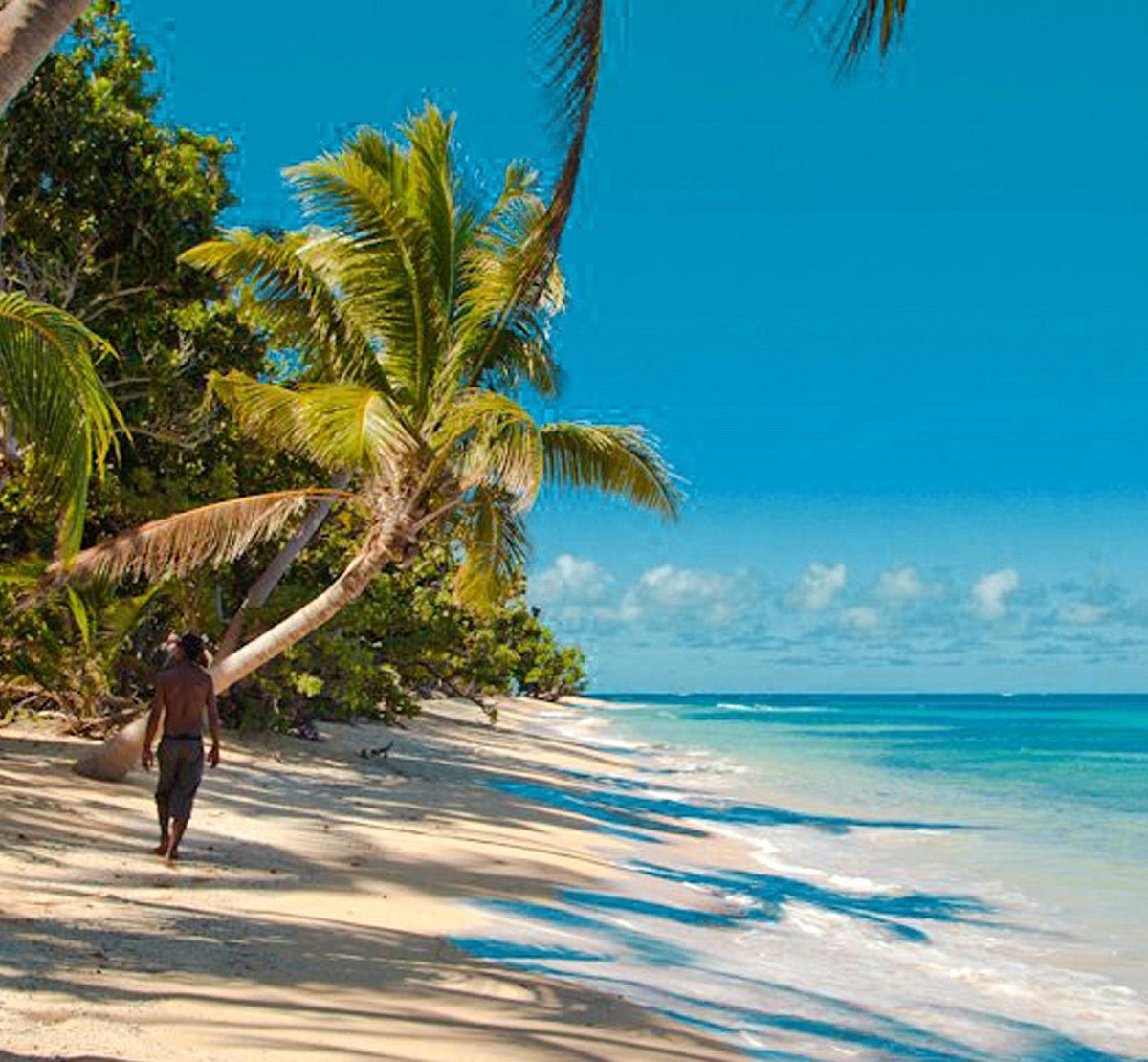
Maqai Beach Eco Surf Resort is a 2-star eco-resort on Qamea Island, north of Taveuni, with nine beachfront bures along a white sand beach backed by tropical rainforest. Rates start from $413 per night and include all meals — breakfast, lunch, and dinner. There are no roads on the island, no traffic noise, no resort crowds. Getting there requires a flight to Taveuni followed by a short boat transfer. The experience is one of the most genuine and immersive Fijian stays available anywhere in the country: gifted musician staff who perform traditional songs nightly, surf breaks right off the beach, snorkeling with sea turtles, cultural visits to a local village and church, and an after-dinner atmosphere where guests and staff mingle so naturally that the distinction between the two starts to blur.
Where Qamea Island Is and Why It Matters
Qamea Island sits in the far northeast of Fiji, a short distance north of Taveuni — the island Fijians call the Garden Island, famous for its extraordinary biodiversity and the International Date Line. Qamea is smaller, quieter, and significantly less visited than Taveuni. It has no roads. The only way on and the only way off is by boat.
That detail changes the quality of the experience in ways that are hard to convey to someone who hasn’t been somewhere genuinely road-free. Without roads, there is no traffic. Without traffic, the soundscape of the island is entirely natural — waves, birds, the wind through the rainforest, rain on the roof of your bure at night.
Qamea has a white sandy beach, a coral reef visible from the shoreline, and a tropical rainforest that rises immediately behind the resort. Maqai Beach Eco Surf Resort occupies one of the most striking positions on the island — nine bures strung along the beachfront, with the reef break visible from the sand and the forest visible from every other direction.
Getting to Maqai Beach Eco Surf Resort
The journey from Nadi to Qamea is a two-stage trip, and it is worth understanding the logistics before booking.
The first stage is a flight from Nadi International Airport to Matei Airport on Taveuni. Fiji Airways operates this route — flight time is approximately one hour and forty minutes. Matei is a small regional airport; the flight is on a small aircraft. Baggage limits apply and are worth checking before you pack surfboards or dive equipment.
From Matei Airport, the resort coordinates a boat transfer to Qamea Island. The crossing takes around 30 minutes depending on conditions. Confirm transfer arrangements directly with the resort before travelling — the boat schedule is coordinated around flight arrivals, but the remote location means there is less flexibility than you would find at a beach resort with road access.
The total journey from Nadi to Maqai, accounting for flight connection times, typically runs between five and eight hours depending on your originating flight. This is not the kind of resort you reach by accident, and that is precisely the point.
The resort phone is +679 990 7761. Given the remote location and the logistics of coordinating boat transfers, contacting Maqai directly well before arrival is essential rather than optional.
The Nine Bures: What to Expect
Maqai runs nine beachfront bures. That is the entire accommodation inventory. At full capacity, there are nine groups of guests sharing a beach, a bar, a restaurant, and a reef. The scale is what produces the atmosphere — this is not a boutique resort trying to feel small despite its size; it is genuinely small in every practical sense.
The bures are traditional Fijian-style structures positioned along the beach, each with direct access to the sand. The design is simple and intentional — natural materials, high ceilings, the kind of construction that keeps bures cool in tropical heat without requiring air conditioning to do all the work. Outdoor showers are part of the experience, positioned to take advantage of the setting rather than enclosed from it. Hammocks hang between palms. Mosquito nets are provided — a practical necessity in any Fiji beach accommodation, particularly one this close to the forest edge.
What the bures do not have, by design, is the full complement of modern amenities that larger hotels offer. There is no television in the bure competing with the sound of the surf. There are no room service menus, no minibar, no gym. The absence is not a shortcoming — it is the point of Maqai. Guests arrive, remove their shoes, and genuinely do not need them again for the duration of the stay. The beach is the agenda.
For guests who require air conditioning, reliable mobile data, and the standard amenities of an international resort stay, Maqai will not suit. For guests who can make peace with a simpler physical environment in exchange for something harder to find — genuine remoteness, authentic community, nature unfiltered — the bures deliver exactly what is promised.
The Surfing: Reef Break and Maqai Break
Surfing is one of the primary draws at Maqai, and the setup is unusually good for a small eco-resort that also caters to non-surfers.
The reef break sits directly in front of the resort. From the beach, you can read the waves before you paddle out, which is a meaningful practical advantage when conditions are variable. The break is best suited to surfers with some experience — reef breaks require a degree of confidence and situational awareness that beginners are still developing — but it is not an expert-only situation. The resort offers a “Learn to Surf” package for beginners who want to take their first steps in a setting with consistent, manageable waves rather than a beach break choked with crowds.
The Maqai Break is the second option, accessible via a short boat trip from the resort. This is a more substantial wave that gives experienced surfers something to genuinely work with. The resort organises boat transfers for guests wanting to session Maqai Break, which means the logistics are handled and surfers can focus on the water rather than on coordinating transport.
The combination of a learner-friendly option directly in front of the resort and a more challenging break a short boat ride away makes Maqai one of the more practically well-rounded surf resorts in Fiji. Surf season in this part of Fiji runs broadly from May to September when the southeast trade winds generate consistent south swell. Surf guests should check seasonal conditions and discuss timing with the resort before confirming travel dates.
Non-surfers are not left watching from the beach. The reef, the diving, the hiking, and the cultural programme mean a couple where one partner surfs and one does not will both have full days — an important practical consideration that Maqai handles well.
PADI Diving and Snorkeling: Sea Turtles on the Reef
The reef at Qamea is in good health and the underwater life reflects that. Snorkeling is available directly off the beach, and sea turtle encounters are a regular occurrence here — not as a staged or guided wildlife encounter, but as part of what the reef simply produces when you get in the water. For guests who have never snorkeled alongside a sea turtle, it is a genuinely remarkable experience — the animals are large, calm, and apparently unbothered by the presence of humans in their habitat.
PADI certified diving is offered for guests who want to go deeper than snorkeling allows. The Qamea reef system contains the full range of tropical Pacific marine life — reef walls, coral formations, and fish diversity that the northeast Fiji region is known for. Taveuni and the surrounding islands sit in a zone of exceptional biodiversity, and the diving reflects that.
Other water activities available at Maqai include fishing, kayaking, and stand-up paddleboarding. The bay in front of the resort is calm enough in most conditions for paddleboarding and kayaking without requiring significant prior experience, which makes these activities accessible to guests who aren’t comfortable yet in open water.
The Musicians: Evening Performances and After-Dinner Community
This is the element of Maqai that is hardest to describe but impossible to leave out.
The staff at Maqai Beach Eco Surf Resort are gifted musicians. They perform traditional Fijian songs for guests every evening — not as a scripted entertainment programme in a venue, but as a natural continuation of the day. After dinner, the atmosphere becomes communal. Guests and staff gather, stories are exchanged, music happens. The boundary between the people who work at the resort and the people visiting it softens to the point where the distinction feels almost artificial.
Fijian music, performed by people for whom it is living culture rather than tourism product, sounds different from the same songs performed on a stage at a resort in Nadi. The difference is audible and emotional. Arrive with no particular interest in music and you will leave talking about the evening performances anyway.
The staff roster includes Jerry, Floyd, Uli, Junior, Pele, Mosi, Tui, Cathy, Charlie, James, Navo, and Baile. Individual staff members are known by name within the first day or two — at a nine-bure resort with a small permanent team, genuine personal connections form quickly.
The Church Trip and Village Visit: Navo’s Community
The church trip is a signature experience at Maqai that deserves specific explanation — it is not a tourism product, and understanding what it actually is helps set the right expectation.
Guests are invited to accompany staff member Navo to his village and to the local church. This is not a performance or a demonstration laid on for visiting travellers. It is an invitation into Navo’s actual community, his family’s church, and the people he belongs to. The welcome extended to guests who make the trip is genuine — the experience is one of being made to feel like a member of the community rather than a visitor being shown something.
The specific quality of inclusion — not observation, but participation — is what distinguishes the church trip from cultural demonstrations at larger resorts where the relationship between host and guest is more transactional.
It is worth being respectful about what this experience represents. The Fijian community extending this welcome to strangers is doing something genuinely generous. Approach with curiosity and humility and it becomes one of the most meaningful experiences of any Fiji visit.
The trip is complemented by the broader cultural immersion that Maqai prioritises throughout a stay. The kava ceremony, the conversations with staff after dinner, the Fijian music — these are not separate scheduled activities slotted into a day; they are the texture of the resort’s daily life.
Guided Hikes on Taveuni
The proximity of Taveuni — a short boat ride from Qamea — opens up hiking that few Fiji resorts can offer at this level of quality. Taveuni is one of the most biodiverse islands in the Pacific. The interior contains tropical rainforest, waterfall systems, and the Bouma National Heritage Park, which covers over 80 percent of the island.
Staff member James leads these excursions. The Taveuni hike is a genuine highlight — the range of what can be done from Qamea in a single day speaks to why Maqai’s location is more of an asset than it might appear from a map.
The Tavoro Waterfalls within Bouma National Heritage Park are a standard destination for guided hikes. The forest on Taveuni contains species found nowhere else — the island has been largely spared the agricultural clearing that has reduced biodiversity on Viti Levu and Vanua Levu. For guests interested in birds, the native Fiji species found in Taveuni’s forests include the orange dove and silktail — two of the most sought-after bird species in the Pacific region.
The hikes are not technically demanding in the sense of requiring mountaineering experience, but the tropical conditions — heat, humidity, uneven rainforest terrain — mean reasonable physical fitness is helpful. Trail conditions vary with rainfall. The resort staff will advise on conditions and appropriate footwear.
Land Activities and the Resort Atmosphere
For days between surfing, diving, and hiking, the resort offers a full range of activities that do not require getting in the water or taking a boat to Taveuni.
Volleyball on the beach, table tennis, badminton, and board games are available on-site — the kind of activities that fill the gap between a morning surf session and lunch, or the hours between an afternoon snorkel and the evening gathering. Maqai is not a resort built around scheduled programming and activity lists. The days here have a rhythm rather than a timetable.
The bar operates each evening and is the physical centre of the after-dinner socialisation that defines the Maqai experience. It is a beach bar at a remote eco-resort — cold drinks in the right setting. The combination of the bar, the musicians, and the communal dining that precedes it creates an evening atmosphere of social warmth that is very difficult to engineer and very easy to recognise when it is real.
The restaurant serves three meals daily as part of the all-inclusive rate. Communal dining is the structure — guests eat together, which in a nine-bure resort with rotating visitors produces the natural conditions for conversation between people who arrived as strangers. Dietary requirements should be communicated to the resort in advance of arrival.
Maqai for Solo Travellers, Couples, Surfers, and Families
Maqai is one of the more genuinely multi-purpose small resorts in Fiji in the sense that the guest mix — solo travellers, couples, surfers, families — is broader than the eco-resort category might suggest, and the resort handles each group well.
For solo travellers, staff member Mosi is particularly attentive to guests travelling alone — making sure they feel included, comfortable, and genuinely part of the group rather than peripheral to it. The communal dining and the evening musician gatherings are naturally inclusive structures for solo guests. At a nine-bure resort where everyone eats together and everyone ends up around the same bar after dinner, solo travellers rarely feel isolated.
For couples, the beachfront bures, the hammocks, the outdoor showers, and the genuine privacy of a no-roads island produce a romantic setting without it being the explicit marketing pitch of the resort. Maqai achieves romantic atmosphere because of what it is rather than because of artificial staging.
For surfers, the two breaks — reef break directly in front of the resort and Maqai Break by short boat transfer — combined with the all-inclusive pricing and the absence of crowd-generating resort facilities make Maqai one of the cleaner surf setups in Fiji. There are no day-trippers. The breaks are accessed by resort guests, which keeps the water from becoming the kind of situation familiar from more accessible surf destinations.
For eco-travellers and cultural enthusiasts, the combination of genuine Fijian community engagement — the church trip, the village visit, the musicians, the staff relationships — and the natural environment of a road-free island with active coral reef and rainforest hiking on an adjacent island represents a Fiji that many travellers say they are looking for but rarely manage to find.
Maqai is not suited to guests who require the infrastructure of a mid-to-large resort — reliable mobile connectivity, air conditioning, room service, a spa, or the kind of entertainment programme that a resort with 100 rooms can sustain. Know which of those things you actually need before booking.
Pricing, Inclusions, and Practical Notes
Rates at Maqai start from $413 per night, and that rate includes three meals daily — breakfast, lunch, and dinner. For a resort at this level of remoteness with all-inclusive dining, the headline figure is more meaningful when considered against what you would otherwise spend on food over a multi-day stay at a self-catering property.
The all-inclusive meal structure reflects the practical reality of the location: there is nowhere else to eat on the island. It also contributes to the communal atmosphere, since all guests are eating at the same time in the same place each day, which is the foundation of the after-dinner socialising that defines the Maqai experience.
Activities vary in terms of what is included and what carries an additional charge. Snorkeling, kayaking, paddleboarding, volleyball, and the beach facilities are available to all guests. Surfing, PADI diving, fishing, and guided hikes to Taveuni may carry additional costs — confirm the current inclusions directly with the resort at +679 990 7761 before arrival so that your budget is accurate.
Packing for Maqai requires some specific thought. The outdoor shower situation means reef-safe sunscreen is important — the reef immediately offshore is worth protecting. Water shoes are useful for reef walks. Mosquito repellent should be packed, as should a lightweight rain jacket for Taveuni hikes.
Frequently Asked Questions
How do you get to Maqai Beach Eco Surf Resort from Nadi?
Fly from Nadi International Airport to Matei Airport on Taveuni — the flight takes approximately one hour and forty minutes on Fiji Airways. From Matei, the resort arranges a boat transfer to Qamea Island, which takes around 30 minutes. The full journey from Nadi typically runs five to eight hours depending on your flight connection. Contact the resort at +679 990 7761 well before arrival to confirm transfer arrangements, as the boat schedule is coordinated around flight arrivals.
Is Maqai Beach Eco Surf Resort good for beginner surfers?
Yes. The resort offers a “Learn to Surf” package specifically for beginners. The reef break directly in front of the resort provides consistent, readable waves that are manageable for those starting out. The Maqai Break, accessed by a short boat trip, is better suited to intermediate and experienced surfers. The combination of both breaks means guests at different levels can surf simultaneously without one group being out of their depth at the other’s wave.
What is the church trip and village visit at Maqai?
The church trip involves accompanying staff member Navo to his village and local church. This is an invitation into a real Fijian community — not a tourism performance or demonstration. Guests are welcomed by Navo’s community as participants rather than observers. It is appropriate to approach the trip with respect, curiosity, and an openness to the community’s welcome rather than simply watching it.
Are sea turtles really common during snorkeling at Qamea?
Sea turtle encounters during reef snorkeling at Maqai are a regular occurrence rather than a rare event. The reef in front of the resort is in good health and turtles are a consistent part of the marine environment here. Wildlife encounters can never be guaranteed — the turtles are wild animals moving freely on the reef — but Qamea’s reef system and its northeast Fiji location mean conditions strongly favour sightings.
What does the all-inclusive rate at Maqai cover?
The base rate of $413 per night includes accommodation in a beachfront bure and three meals daily — breakfast, lunch, and dinner. The all-inclusive structure reflects the remote island location, where there are no alternative dining options. Specific activity inclusions beyond the base meals and accommodation vary and should be confirmed directly with the resort before arrival. PADI diving, guided hikes to Taveuni, fishing trips, and surfing at the Maqai Break may carry separate charges.
Is Maqai Beach Eco Surf Resort good for solo travellers?
Yes — consistently so. The communal dining structure and the evening gatherings around the bar and musicians are naturally inclusive settings for solo guests. Staff member Mosi is notably attentive to solo travellers, making sure they feel part of the group rather than peripheral to couples and families. The nine-bure scale means solo travellers are integrating into a small, genuine community of guests rather than being lost in a large hotel.
What is the best time of year to visit Maqai on Qamea Island?
The dry season from May to October brings lower humidity, more consistent winds, and better conditions for surf and outdoor activities. Surf season broadly aligns with this window, with southeast trade winds generating south swell most reliably from May through September. The wet season from November to April brings heavier rainfall and higher humidity, though the resort operates year-round and the cultural, diving, and snorkeling experiences are available across all months.
Does Maqai Beach Eco Surf Resort have air conditioning?
The bures at Maqai are designed in the traditional Fijian style with high ceilings and natural ventilation, positioned to take advantage of trade winds. Air conditioning is not a standard amenity. Outdoor showers, hammocks, and the beach setting mean the experience is oriented toward living in the environment rather than apart from it — which is consistent with the eco-resort philosophy but worth knowing clearly before booking.
By: Sarika Nand